Shenzhen Pengsheng MicroVision Tech Co., Ltd.


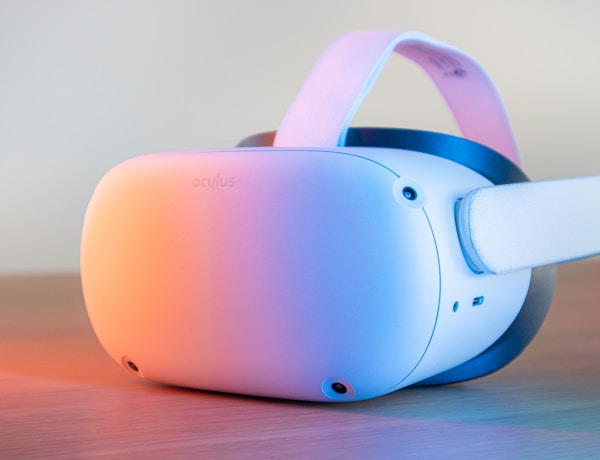

On June 6, 2023, Apple Inc. unveiled the Apple Vision Pro—the defining next-gen device powered by silicon-based Micro-OLED microdisplays[1].
Following its official debut at WWDC 2023, the spatial computing headset captured global attention. Driven by this milestone launch, Micro-OLED technology has stepped out of the labs and into the spotlight of the global tech community.
Here is an inside look at the 7 key trends defining the trajectory of silicon-based Micro-OLED microdisplays.
1. Unprecedented Resolution and Pixel Density
Technological evolution is perpetually driven by escalating consumer demands, and Micro-OLED is no exception. To eliminate the “screen-door effect” in near-eye displays, the industry is pushing the boundaries of pixel density through several technical breakthroughs:
- Lithography Breakthroughs: A joint initiative between Germany’s University of Münster and China’s Soochow University has yielded an advanced photolithography technique. Utilizing a pioneering “pattern-first, growth-later” fabrication approach, they successfully achieved a staggering Micro-OLED resolution exceeding 20,000 PPI[2].
- Substrate Scaling: Leveraging sub-micron semiconductor nodes, manufacturers are directly etching drive circuits onto single-crystal silicon substrates, drastically reducing pixel pitch while maximizing integration density[3].
- Advanced Pixel Architecture: Emerging designs feature refined sub-pixel layouts that optimize light emission efficiency within constrained physical footprints.
- High-Mobility Organic Materials: Ongoing R&D into organic compounds with superior carrier mobility ensures faster response times at ultra-high resolutions[4].
2. Ultra-Precise Color Accuracy and Fidelity
Due to inherent hardware constraints, legacy display technologies often suffer from color distortion. Future Micro-OLED developments will prioritize impeccable color accuracy and expanded color volume:
- Multi-Stack Architectures: Fourth-generation WOLED technology utilizes a sophisticated 4-stack structure—evaporating anode, red, blue, green, and cathode layers sequentially onto the substrate—significantly enhancing color purity compared to older 3-stack variants[5].
- Next-Gen Emissive Materials: Synthesizing novel organic light-emitting materials ensures that the RGB primary colors achieve unprecedented spectral purity.
- Precision Current Control: Implementing advanced current-source PWM (Pulse Width Modulation) pixel driving circuits allows for granular control of current signals, enabling precise pixel-level calibration.
- Dynamic Degradation Compensation: Integrating proprietary OLED aging compensation circuits directly into the backplane counteracts color shift and luminance decay over the display’s lifecycle.
- Algorithmic Color Management: Optimizing real-time color management algorithms ensures that input image signals are mapped perfectly to the display’s native high-color-gamut capabilities.
3. Aggressive Power Consumption Reduction
For portable form factors like AR/VR headsets and smart glasses, the engineering challenge lies in balancing lightweight design with prolonged battery life. In mission-critical enterprise or defense scenarios, sudden power depletion can disrupt operations. While lithium-battery energy density continues to incremental improve, hardware efficiency remains paramount. Reducing display power consumption is vital for extending runtime and aligning with global ESG and sustainability goals. Key optimizations include:
- CMOS Driver Architecture Optimization: Engineering streamlined signal routing, utilizing low-impedance materials, and refining circuit layouts significantly mitigates parasitic resistance and power loss.
- High-Efficiency Phosphor and TADF Materials: Adopting phosphorescent materials that leverage both singlet and triplet excitons drastically improves internal quantum efficiency. Concurrently, researchers are fine-tuning molecular orbital distributions to accelerate radiative exciton transitions.
- Micro-Lens Array (MLA) Integration: Integrating an optimized MLA layer precisely collimates out-coupled light, mitigating internal total internal reflection (TIR) and vastly increasing light extraction efficiency[6].
- Substrate-Level Synergies: Advanced Chemical Vapor Deposition (CVD) processes enhance single-crystal silicon substrate quality, reducing defect density and optimizing power efficiency across the backplane.
4. Solidifying Dominance in the AR/VR Ecosystem
With its native high resolution, infinite contrast ratios, and sub-millisecond latency, silicon-based Micro-OLED is uniquely positioned to dominate the spatial computing market.
As metaverse architectures mature, generative AI accelerates spatial content creation, and consumer tech giants roll out new wearable portfolios, demand for high-end headsets will surge. This robust market pull guarantees a broader commercial runway for Micro-OLED, attracting significant venture capital and institutional investment that will further drive down cross-industry manufacturing costs[7].
5. Rapid Expansion into Automotive and In-Vehicle Displays
The automotive sector is emerging as a major growth engine. Micro-OLED microdisplays are increasingly being integrated into next-generation Automotive Head-Up Displays (HUDs) and ultra-sharp instrument clusters, vastly improving driver situational awareness and active safety.
Driven by the global shift toward software-defined and intelligent new energy vehicles (NEVs)—epitomized by market leaders like Tesla and rising tech-automotive entrants like Xiaomi—high-performance in-vehicle displays are transitioning from luxury options to standard vehicle architectures[8].
6. Surging Procurement in Defense and Aerospace
Escalating global defense allocations have significantly altered the aerospace supply chain, heavily impacting the capacity allocation of advanced microdisplays. The massive valuation increases of European defense primes (such as Rheinmetall and Thales) reflect a structural increase in defense spending[9].
In modern defense frameworks, Micro-OLED microdisplays have become indispensable components for Helmet-Mounted Displays (HMDs), night-vision systems, and situational awareness optics, drastically augmenting dismounted soldier lethality and combat readiness[10].
7. Economies of Scale: Capacity Expansion and Cost Amortization
In response to soaring market forecasts, tier-one panel manufacturers are aggressively funding the construction of dedicated silicon-based Micro-OLED fabrication lines.
This influx of capital will optimize yield rates, standardize manufacturing equipment, and drive down the average selling price (ASP) of commercial-grade modules. Concurrently, elite-tier Micro-OLED architectures—protected by intense technical barriers and high R&D thresholds—will continue to command premium margins at the high end of the market.
Conclusion
As silicon-based Micro-OLED microdisplay technology matures, the cost barrier for premium wearable devices will fall, triggering mass consumer adoption. This shift is further accelerated by Generation Z’s insatiable demand for immersive personal electronics, drawing unprecedented investment across the supply chain.
From upstream material providers and lithography equipment manufacturers to chip design houses and display foundries, industrial collaboration is tightening, paving the way for a highly integrated, resilient Micro-OLED ecosystem.
References:
- Apple Inc. (2023). Introducing Apple Vision Pro: Apple’s first spatial computer. WWDC 2023 Official Launch Documentation.
- Nature Nanotechnology / Advanced Materials Research (2023). Sub-micron Photolithography and Patterning for Ultra-High Density Organic Light-Emitting Diodes. Joint Study by University of Münster and Soochow University.
- IEEE Journal of Solid-State Circuits (2024). Advanced CMOS Backplane and Driving Circuitries for Active-Matrix Micro-OLED Microdisplays.
- Society for Information Display (SID) Symposium Digest of Technical Papers (2024). Review of High-Mobility Organic Emissive Materials and Multilayer Stack Optimization for Near-Eye Displays.
- Journal of the Society for Information Display (2023). Evolution of White OLED (WOLED) Architectures: From 3-Stack to High-Purity 4-Stack Structures for Microdisplays.
- Optics Express (2024). Light Extraction Efficiency Enhancement in Silicon-Based Micro-OLEDs Using Integrated Microlens Arrays (MLA).
- Omdia Market Research Report (2024). Micro-OLED Display Technology and Market Forecast: Fab Capacity Expansion and Cost Amortization.
- Society of Automotive Engineers (SAE) International (2025). Next-Generation Intelligent In-Vehicle Displays and Augmented Reality Head-Up Displays (AR-HUD) in New Energy Vehicles.
- Stockholm International Peace Research Institute (SIPRI) (2025). Trends in Global Military Expenditure and Defense Industrial Capacity Allocation.
- SPIE Defense + Commercial Sensing Conference Proceedings (2024). Helmet-Mounted Displays (HMDs) and Advanced Electro-Optics for Enhanced Dismounted Soldier Situational Awareness.