
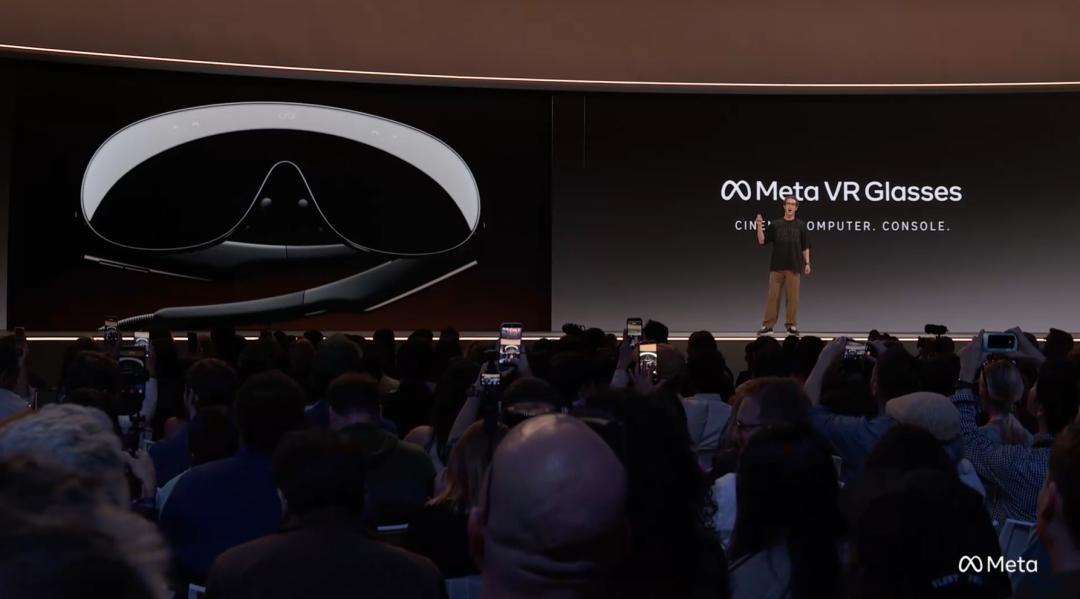
At the recently concluded Meta Connect 2026, Meta CEO Mark Zuckerberg unveiled another major play in spatial computing: Meta VR Glasses, priced at $1,299.99 and scheduled for commercial release in spring 2027.
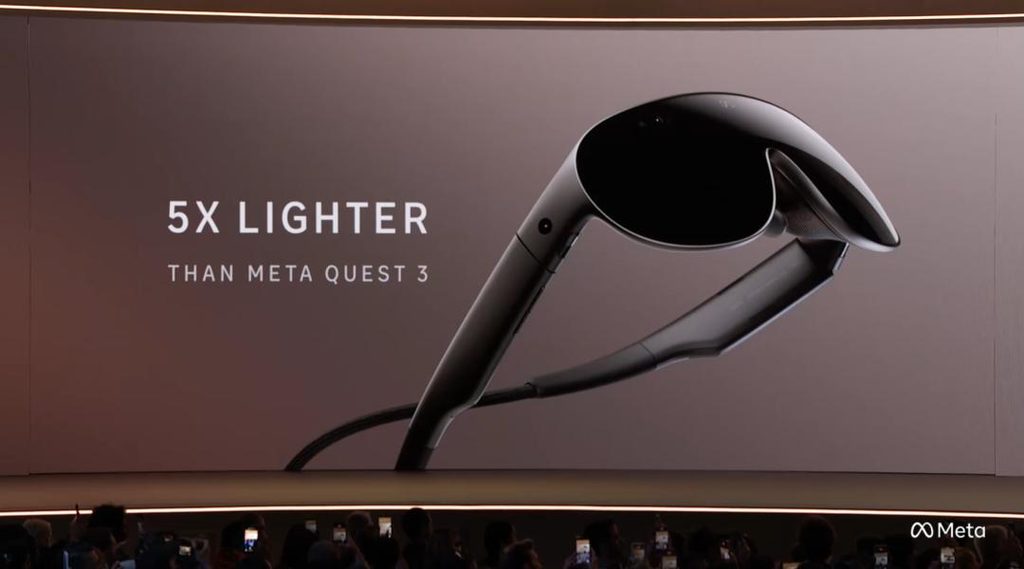
During the keynote, he emphasized its exceptional wearability. Ditching the bulky “armor-style” form factor of legacy VR headsets, the new device hits an astonishing weight of just 100 grams — one-fifth of the current Quest 3 (515 grams).
Mainstream VR/MR devices such as the Quest 3 and Apple Vision Pro have long been constrained by physical limits, typically weighing above 500 grams. While users are drawn to the futuristic headset design, the heavy hardware often causes neck strain during extended sessions. For the first time, Meta adopts a compute-display decoupled architecture, leaving only 100 grams resting on the user’s face. This milestone signals the industry’s departure from the cumbersome helmet era.
This article breaks down the published specifications of Meta VR Glasses to uncover its core strengths. We also analyze its long-term prospects and market impact from the perspective of independent industry specialists.
I. Split-System Design & Specifications Overview
The biggest question is how Meta achieved this radical 100-gram weight cut. The answer lies in its two-part compute-display decoupled system. The official concept can be summarized as follows:
Eyeglass unit (~100g): Houses only the optical display stack, sensors, magnesium alloy thermal frame and full-color passthrough cameras. It eliminates head straps and forehead bands, featuring an open-side frame that reduces pressure on cheekbones, avoiding pinching, nasal compression and head tightness common on traditional headsets. Removing onboard processors, high-capacity batteries and mainboards also drastically cuts heat transfer to the face, greatly improving user comfort.
Pocket Puck / External Compute Module: All core processing chips, large-capacity batteries and memory are relocated to a standalone external puck. It connects to the glasses via a thin, high-bandwidth optical cable.
This design is not without tradeoffs. The optical tether linking the glasses and pocket puck risks snagging on clothing, picking up wind noise or restricting movement when users turn around. While the bandwidth easily supports 5K resolution at 120Hz, real-world user adoption remains to be validated by the market. Furthermore, total system weight is not eliminated — merely relocated. Though the smart glasses are five times lighter, roughly 300 grams is shifted to the pocket puck. Users will need to carry this heavy module in their pocket or clip it to a belt.
Meta VR Glasses Key Hardware Specs
| Category | Key Specifications & Benchmarks |
|---|---|
| Facial Weight | ~100g; 1/5 of Quest 3 (515g), 1/6 of Apple Vision Pro (600g+) |
| Display Panel | Micro-OLED (5K Infinite Display); per-eye resolution 2412 × 2288, 120Hz refresh rate |
| PPD | 37 PPD. Approaches the human retinal limit (~60 PPD), far exceeding Quest 3 (25 PPD) |
| Main Processor | Qualcomm Snapdragon Reality Elite, power-efficient platform built for compact split devices |
| Memory & Storage | 12GB RAM + 128GB base configuration; supports smooth multitasking virtual desktops and 8K video encoding/decoding |
| Battery & Fast Charging | Up to 3 hours of HD video playback; 45W fast charging; high-density lithium battery inside pocket puck |
| Interaction System | Eye tracking + natural hand gestures + voice (Meta AI). No controller required; compatible with 75+ gesture-native games |
II. Generational Leap in Microdisplay Tech: Micro-OLED Powers a Private Cinema
Meta VR Glasses moves beyond conventional Fast-LCD and adopts Micro-OLED (OLED-on-Silicon), delivering four major display upgrades:
Elimination of screen door effect: Older VR headsets suffered from screen-door artifacts and edge blurriness, causing eye fatigue when reading small web text or coding for long stretches. Combining Micro-OLED, 37 PPD and Pancake optics, Meta renders crisp, jagged-free text. Users can deploy multiple virtual large screens for office work and clearly view fine lines of code.
Premium audiovisual experience: It is the world’s first VR headset to earn official IMAX Enhanced certification, with native support for Dolby Vision and Dolby Atmos. Selected movies can play in IMAX’s expanded 1.90:1 aspect ratio. Building a physical private IMAX theater at home costs tens of thousands of dollars and cannot be carried while traveling, flying or working in compact rooms.
Immersive live sports ecosystem: Sports fans watching on regular screens remain separated from the action, while courtside tickets for events such as NBA games or Champions League matches are expensive and scarce. Meta has partnered with major streaming platforms including Disney+, Prime Video, YouTube and ESPN. Starting from its 2027 launch, Meta promises over 100 live immersive sports broadcasts per year in 8K with a 180° field of view, simulating front-row courtside viewing. This places extreme demands on network bandwidth, content capture costs and global CDN distribution infrastructure.
III. Commercial Logic & Engineering Tradeoffs
While the 100g form factor is impressive, Meta’s architectural strategy comes with tangible compromises.
The 100g measurement only accounts for weight borne by the face. The pocket puck’s full weight and wearing ergonomics have not been fully disclosed; excessive mass here may deter mainstream consumers. Daily usage requires carrying the puck and managing an optical cable hanging from the glasses.
Officially quoted continuous playback lasts up to three hours with 45W fast charging — enough for a full-length 3D film or an NBA game. However, users aiming to replace desktop PCs with multi-screen virtual workspaces will still need wall power or external power banks for the pocket puck.
Most users already carry power banks for smartphones. Adding another charging accessory means bulkier portable power, forcing buyers to weigh whether the device justifies the extra gear.
Industry analysts regard the $1,299.99 price tag as carefully calibrated. It sits well above the mainstream gaming-focused Quest 3/3S lineup ($299–$499), yet substantially cheaper than Apple Vision Pro ($3,499), targeting premium audiovisual enthusiasts and mobile productivity power users.
Closing Remarks
The debut of Meta VR Glasses marks the Micro-OLED industry’s entry into a multi-billion-dollar large-scale commercial market. Instead of building a bulky head-mounted computer, Meta has created a lightweight private display that fits easily inside a bag. Users can put it on instantly to access a 5K giant screen and IMAX-grade cinematic experience. Its future performance remains to be seen.
References
- Meta. (2026, September). Meta Connect 2026 keynote: Meta VR Glasses product launch.
- dragon Reality Elite platform for split spatial computing devices.
- IMAX Corporation. (2026). IMAX Enhanced certification for Meta VR Glasses.
- Dolby Laboratories. (2026). Dolby Vision & Dolby Atmos spatial display hardware compatibility brief.
- Omdia. (2026). AR/VR hardware market forecast 2026–2030.
- TrendForce. (2026). Micro-OLED panel supply chain and specification benchmark report.
- Meta Reality Labs. (2026). Pancake optics and Micro-OLED technical whitepaper.
- ESPN. (2026). Immersive 8K live sports streaming partnership announcement.
- Apple Inc. (2026). Apple Vision Pro hardware specification sheet.
- AVIXA. (2026). Spatial computing headset ergonomics and display performance benchmark study.
Legal Disclaimer
This article is for informational purposes only and shall not be construed as investment advice. All product specifications, pricing, release schedules, content partnerships and performance claims are subject to change based on product engineering adjustments, supply chain constraints and corporate commercial decisions. The author and translator accept no liability for any commercial or investment decisions made based on this article. All trademarks referenced belong to their respective owners.