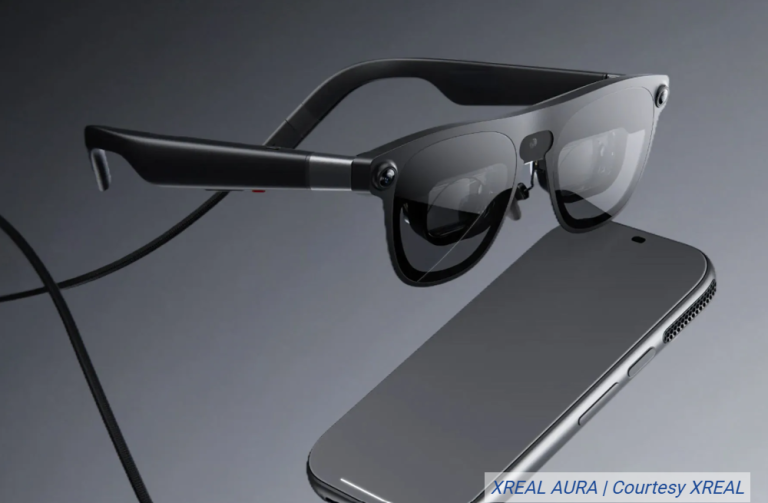
XREAL Aura: The First-of-Its-Kind Android XR Glasses — Can It Replace the Vision Pro?
As the first AR glasses powered by the Android XR operating system, the XREAL Aura drew widespread industry…

Welcome to our dedicated hub for next-generation spatial computing and near-eye display technologies. As augmented reality (AR) and extended reality (XR) hardware rapidly evolve, the demand for ultra-compact, high-luminance, and energy-efficient microdisplays has never been higher.
This category is structured around the core technological pillars shaping the future of wearable tech. Our editorial coverage is organized into the following key content areas:
Micro OLED Technology & Breakthroughs: In-depth analysis of advanced silicon-based OLED architectures, including breakthroughs in high-efficiency red OLED stacks, pixel-level differential refresh mechanisms, and high-brightness achievements (such as 35,000+ cd/m² displays).
AR Smart Glasses & Optical Integration: Exploring the design, manufacturing, and optical assembly of lightweight near-eye devices, waveguide technologies, and pixel precision alignment for seamless real-world virtual overlays.
Silicon Backplane & Semiconductor Design: Updates on cutting-edge semiconductor nodes (e.g., 28nm CMOS backplanes) and on-chip processing that drive ultra-high PPI and extreme energy efficiency.
Industry Trends & Market Applications: Tracking commercial deployment, product rollouts, and industry forecasts across consumer AR smart glasses, automotive head-up displays (HUD), and professional wearable instruments.
As the first AR glasses powered by the Android XR operating system, the XREAL Aura drew widespread industry…
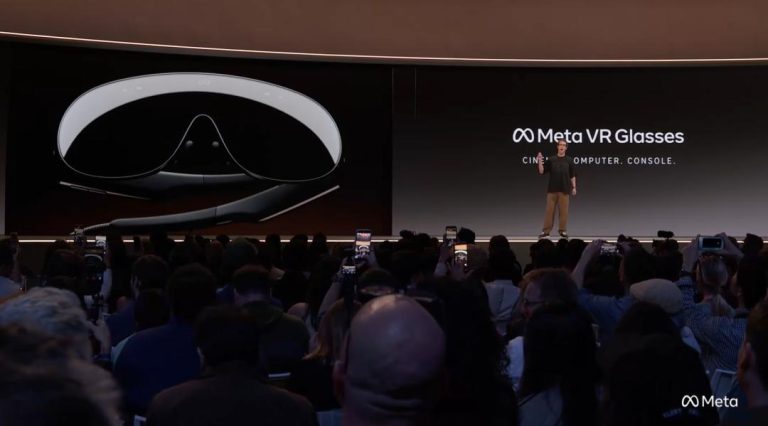
At the recently concluded Meta Connect 2026, Meta CEO Mark Zuckerberg unveiled another major play in spatial computing:…
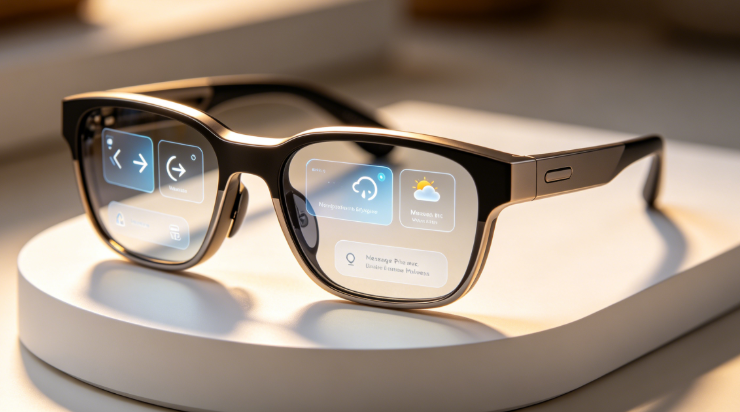
At the 2026 World Artificial Intelligence Conference (WAIC 2026), four primary exhibition hubs—the World Expo Center, World Expo…
How to Select Micro OLED Panels for Waveguide AR Navigation Glasses | Brightness & Power Benchmarks
From Meta Ray-Ban to Apple N50: discover how on-device AI, Micro-LED breakthroughs, and waveguide optics are transforming consumer AR glasses into mainstream wearable tech by 2027.
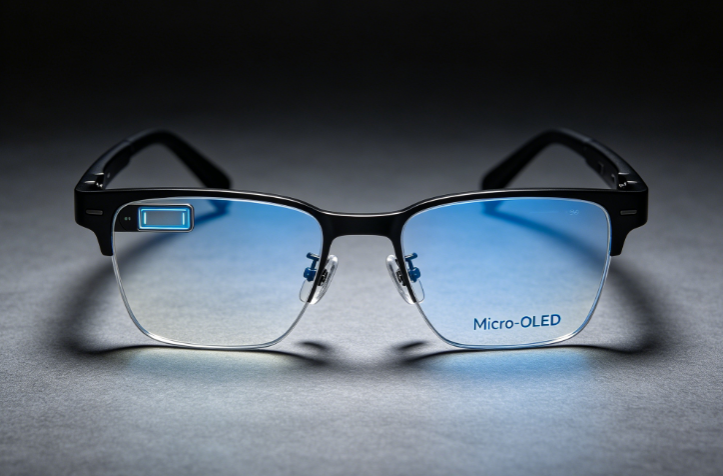
Explore how silicon carbide waveguides, polarization volume gratings (PVG), and quantum dot Micro-LED are solving AR's impossible trilemma and enabling all-day consumer smart glasses by 2027.