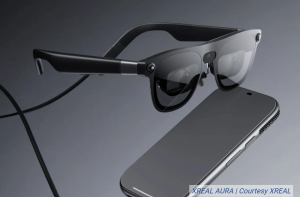


For XR and AR product development, Micro OLED (Micro OLED / OLEDoS, silicon-based OLED) is often the primary core display component to consider. In near-eye display applications, only Micro OLED can deliver ultra-high resolution of thousands of PPI alongside native self-emissive contrast, while fitting within millimeter-scale dimensions.
That said, many hardware startups hit their first roadblock at the procurement stage: most major manufacturers impose minimum order quantity (MOQ) requirements for Micro OLED panels. Before a product is ready for mass-market rollout, buying large volumes of microdisplays upfront carries substantial financial and inventory risk, yet engineering teams still need test rigs and prototypes for validation.
Large semiconductor display manufacturers typically set order thresholds in the thousands of units, which creates a major barrier for teams still in proof-of-concept development. How can teams source samples on a limited budget? How can supply stability be maintained for small-batch Micro OLED procurement? This article shares practical MOQ strategies for startups purchasing Micro OLED displays.

I. Why Micro OLED Panel MOQs Remain High
To understand the high MOQ policies adopted by major manufacturers, it helps to break down supplier cost structures — this knowledge also strengthens your position during commercial negotiations. Two core factors drive elevated Micro OLED MOQs:
Wafer-level Manufacturing
The backplane of silicon-based OLED is fabricated on 8-inch or 12-inch monocrystalline silicon wafers. Foundry tape-out and wafer runs are organized by production lots, which normally contain 25 wafers per lot. A single 12-inch wafer can yield hundreds of 0.39-inch panels or dozens of 1.3-inch panels, resulting in inherently large output per run. Smaller panel formats produce hundreds of dies per wafer, while larger formats only yield dozens; every tape-out therefore generates a high volume of devices.
High-precision OLED Evaporation and Custom Tooling Expenses
Customized driver IC (ASIC) interfaces, bespoke FPC layouts, or special optical packaging (such as stacks engineered for Pancake lenses) demand heavy investment in labor and equipment calibration from panel makers. These custom projects carry even higher MOQ requirements, as manufacturers set high minimum orders to amortize fixed overhead costs.
II. Micro OLED Panel MOQ: Tiered Sampling and Procurement Roadmap for Startups
Stage 1: Proof of Concept & Prototyping — Volume: 1–20 units
Goal: Validate optical path design, display performance, and algorithm compatibility.
Strategy: Avoid ordering bare panels directly from original manufacturers, as they rarely accept low-volume small orders. A custom backplane tape-out commits you to an entire wafer lot and hundreds of thousands of dollars in NRE charges.
Prioritize evaluation kits offered by component suppliers. EVK packages include pre-assembled microdisplays, driver breakout boards (HDMI / Type‑C interfaces), and SDK resources. These kits bypass strict MOQ rules and greatly shorten optical tuning cycles. Suitable suppliers include module integrators, authorized distributors and solution partners such as Pengsheng MicroVision, who usually stock EVK hardware on hand.
Hard Rule: Never launch a custom CMOS backplane tape-out at this stage.
Stage 2: NPI & PVT Low-volume Pilot Run — Volume: 100–500 units
Goal: Complete mechanical stack integration testing, user experience validation, and limited customer sampling.
Strategy: Select standard off-the-shelf form factors. Established modules such as the 0.39-inch 1080P and 0.7-inch FHD variants have mature market adoption and minimize validation risk. Standard panel designs are often held in supplier inventory, making vendors more open to tiered pricing for reduced MOQs. Some suppliers can split existing stock and accept orders starting at 100 units, instead of enforcing the strict lot-based minimums set by fabs.
Request tiered pricing quotes for volumes of 100 / 200 / 300 / 500 units. Qualify a second supplier as backup to mitigate supply disruption or specification revision risks. If minor adjustments are required, opt for semi-custom modifications (FPC revision, optical adhesive selection, updated screening criteria) rather than initiating a new backplane tape-out.
Hard Rule: Do not trigger new mask sets or new backplane tape-out during PVT.
Stage 3: Mass Production (MP) — Volume: 1,000+ units
Goal: Reduce unit BOM cost and lock in supply chain stability.
Strategy: Sign a blanket purchase agreement with the panel manufacturer or authorized primary distributor, covering a 6–12 month rolling forecast, capacity reservation and staggered delivery schedules. This secures volume-based unit pricing without requiring full upfront shipment and capital commitment. Generally, higher annual forecast volumes attract lower unit prices; shipments are released incrementally against confirmed orders.
Key contract clauses to formalize: delivery lead time guarantees, yield commitments, specification change notification windows, last-time-buy terms, EOL end-of-life alerts, and secondary supplier qualification.
III. Three Tactics to Lower Micro OLED Procurement Barriers
- Source from module integrators with active inventory stock: Top-tier panel fabs focus primarily on large-volume orders. Professional module integrators maintain stock of mainstream panel sizes (0.39″ / 0.5″ / 0.7″ / 1.3″) and finished optical engine assemblies.
- Reuse proven driver interface designs: Prioritize Micro OLED modules with standard MIPI or eDP interfaces. Avoid custom baseboard design during sampling phases.
- Adopt integrated panel-plus-optical module delivery: Procure pre-aligned, high-precision bonded optical engine modules. These integrated assemblies carry lower sample MOQs and eliminate contamination and yield loss risks from in-house bonding.
IV. Pitfalls to Avoid in Low-MOQ Procurement
- Some low-cost samples are salvaged test material from panel fabs. Require suppliers to provide official datasheets and formal quality assurance documentation.
- Confirm the long-term support roadmap for your selected part number to prevent supply discontinuation shortly after your R&D cycle concludes.
- Clarify whether pricing covers bare dies or fully assembled modules, and define deliverables explicitly to avoid unplanned costs for driver development and optical bonding later.
- Verify that screening criteria for samples match mass production standards. Watch for hand-picked premium samples that outperform normal production binning.
- Confirm whether MOQ, unit price and lead time will revert to factory minimums once existing inventory is exhausted.
- Validate licensing terms for EVK hardware, driver SDK and firmware to prevent intellectual property infringement risks.
- Formalize acceptance criteria, return policies and yield indemnity in writing; do not rely solely on verbal commitments.
- Maintain consistent wafer lot sourcing. Samples pulled from separate lots frequently show deviations in chromaticity and emission position, complicating optical calibration.
- For semi-custom changes such as FPC revisions or screening adjustments, confirm whether hidden NRE charges or design lock-in costs apply for future revisions.
- When sourcing components from overseas vendors, verify export control rules, customs requirements and compliance paperwork in advance to avoid production-stage hold-ups.
📥 Looking for Micro OLED module solutions with flexible MOQ terms?
Whether you are building prototypes or preparing for pilot production, we supply a full portfolio of Micro OLED panels, evaluation kits (EVK), and highly integrated optical engine modules.
Disclaimer
Content Purpose: This article and its supply chain guidance are for technical discussion and business reference only. They do not constitute a legal guarantee or contractual offer for any component procurement.
Market Volatility and Commercial Terms: Micro OLED MOQ, NRE fees, lead times and wafer pricing fluctuate frequently based on global semiconductor capacity, market demand and internal commercial policies of brands including Sony, BOE, SeeYA and others. All procurement decisions must be validated with formal written quotations (Quotation / PI) and quality assurance agreements (QAA) issued by the original fab or authorized distributors.
Third-party Brands and Trademarks: All referenced Micro OLED brands, interface standards (MIPI, eDP, Type‑C, HDMI, etc.) and technical designations are trademarks of their respective owners and are used solely for objective technical discussion.