Shenzhen Pengsheng MicroVision Tech Co., Ltd.


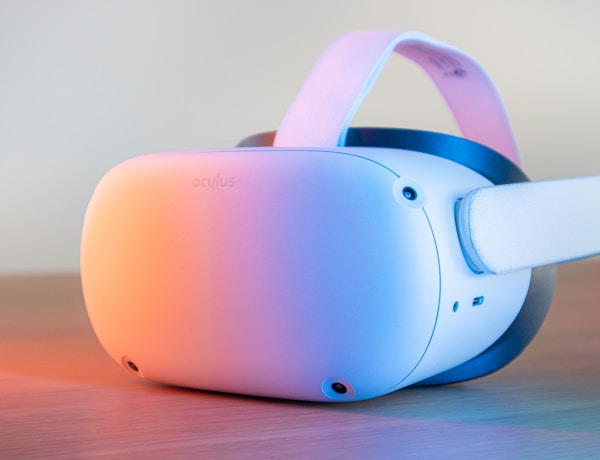

Driven by the launch of Apple’s Vision Pro, research institutions project that global display shipments will reach 16 million units in 2024, representing a year-on-year increase of over 7% [1]. Among these, Micro OLED displays are expected to capture a 10.7% market share. Additional data shows that global shipments of Micro OLED panels for the XR industry stood at approximately 820,000 units in 2023. Demand for Micro OLED screens in XR applications is forecast to rise further by 2028 [2].
Why does the OLEDoS display hold such enormous market potential? The answer lies in its three irreplaceable technological advantages.
1. Superior Display Performance
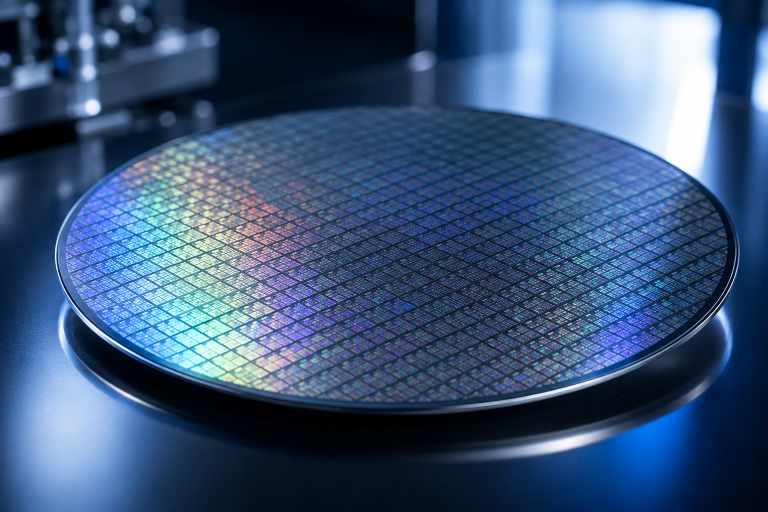
OLEDoS (OLED on Silicon) displays deliver outstanding performance across key technical parameters, including pixel density, response time, contrast ratio, and color gamut. By utilizing monocrystalline silicon wafers as backplanes instead of traditional glass, they overcome the carrier mobility limitations of TFT-based displays [3].
They feature extremely high pixel density—for example, a manufacturer’s 1.33‑inch 4K silicon‑based Micro OLED display achieves an ultra‑high resolution of 3840 × 2160. Integrated with a CMOS driver circuit containing tens of millions of transistors, OLEDoS panels reach pixel densities (PPI) of up to 3000-4000 in high-end configurations, making them ideal for near‑eye and VR devices and enabling exceptionally sharp visuals [4].
Their self‑emissive nature allows precise brightness control at the pixel level. Some 0.49‑inch Micro OLED displays reach 1800 nits, while 0.6‑inch models achieve 1500 nits. At SID Display Week 2024, cutting-edge tandem structures demonstrated peak brightness levels exceeding 10,000 nits [5]. When displaying black, pixels can be completely turned off, resulting in deeper blacks and a high contrast ratio (often > 100,000:1)—an obvious advantage over LCD, LED, and PMOLED technologies. This makes OLEDoS well‑suited for night‑vision goggles, allowing users to discern fine details in low‑light environments.

2. Thinner and Lighter Form Factor
OLEDoS displays are built with small‑molecule vapor‑deposited SM‑OLED materials directly on silicon chips. This integration eliminates the need for separate glass encapsulation layers used in mobile OLEDs, enabling ultra‑thin profiles [6].
These characteristics make them perfect for wearable devices, significantly reducing user fatigue. In recent years, lightweight, comfortable near‑eye displays have entered the market and gained widespread consumer attention. The compact nature of the silicon backplane allows for the integration of driver functions directly into the display area, further reducing the overall footprint of the optical module [7].
3. Higher Energy Efficiency for Extended Runtime
OLEDoS displays consume far less power when rendering dark content, as pixels can be fully deactivated. For example, in a portable thermal imaging system for temperature screening, the OLEDoS display enables total system power consumption of less than 5 milliwatts in standby modes [8].
Research on advanced driving schemes, such as those utilizing TSMC’s 65‑nanometer process, demonstrates that single‑capacitor energy recovery and direct energy recovery techniques can reduce power consumption by over 24% compared to conventional PWM driving [9]. This efficiency supports sustainability and longer battery life, improving user comfort and reducing charging frequency. In outdoor applications—such as disaster relief, firefighting, and industrial troubleshooting—this advantage is irreplaceable.
References:
- [1] International Data Corporation (IDC) (2024). Worldwide Quarterly Augmented and Virtual Reality Headset Tracker.
- [2] DSCC (Display Supply Chain Consultants) (2024). Annual Micro OLED Display Market Report: 2023-2028 Forecast.
- [3] J. Kim, et al. (2024). “High-Mobility CMOS Backplanes for Next-Generation OLEDoS Microdisplays,” Journal of the Society for Information Display (JSID).
- [4] Sony Semiconductor Solutions (2023). Technical Specifications: ECX344A 1.3-inch 4K Micro-OLED.
- [5] SID Display Week 2024 Proceedings. “Advancements in Tandem OLEDoS Structures for 10,000-Nit Peak Brightness,” Symposium Digest of Technical Papers.
- [6] L. Zhou, et al. (2023). “Micro-OLED on Silicon: Materials, Fabrication, and Applications,” Advanced Materials Technologies.
- [7] Counterpoint Research (2024). The Shift to Micro-OLED in the AR/VR Hardware Value Chain.
- [8] Fraunhofer FEP (2023). Ultra-Low Power OLEDoS Microdisplays for Industrial Wearables.
- [9] IEEE Journal of Solid-State Circuits (2024). “A 65nm CMOS Driver with Energy Recovery for High-Efficiency OLEDoS Displays.”