Shenzhen Pengsheng MicroVision Tech Co., Ltd.



Today, we’re breaking down the display technology inside modern VR headsets.
A common question among VR users is: “Why does my VR footage always look like I’m viewing it through a fine mesh screen? Is there any VR headset that delivers crystal-clear visuals just like a smartphone?”
Many consumers experience eye fatigue after using conventional VR headsets for less than an hour, and often feel dizzy while playing fast-paced action games. This is largely because traditional LCD display technology has hit its performance bottlenecks for VR applications.
In recent years, however, Micro-OLED technology has emerged as a game-changing solution. Flagship devices such as the Apple Vision Pro and high-end PCVR headsets adopt this technology, and despite their premium pricing, they have gained massive popularity across the industry. In this guide, we’ll unpack the core principles, advantages, drawbacks, and real-world performance of Micro-OLED VR displays.
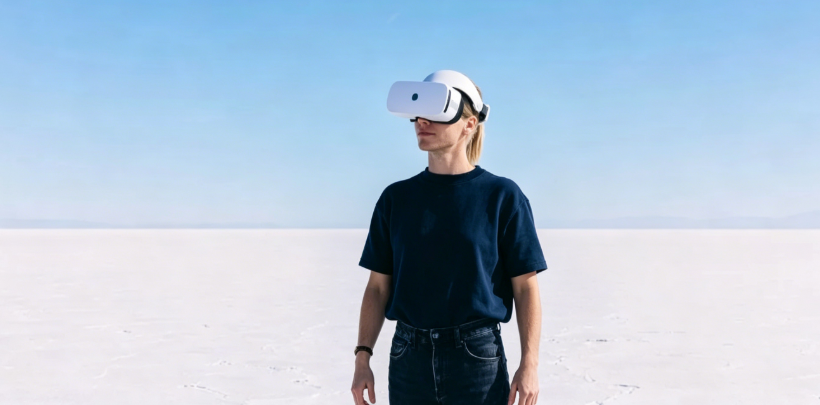
A Micro-OLED VR headset refers to a next-generation premium XR (VR/AR/MR) head-mounted device equipped with silicon-based Micro-OLED displays. In the current consumer and professional XR market, Micro-OLED has become the gold standard for top-tier visual quality.
1. Micro-OLED VR Headsets vs. Traditional VR Headsets
Mainstream consumer VR headsets like the Meta Quest 3 rely on conventional glass-substrate LCD panels, which are fundamentally limited in pixel density and overall performance. Micro-OLED technology represents a revolutionary upgrade in manufacturing architecture and visual fidelity.
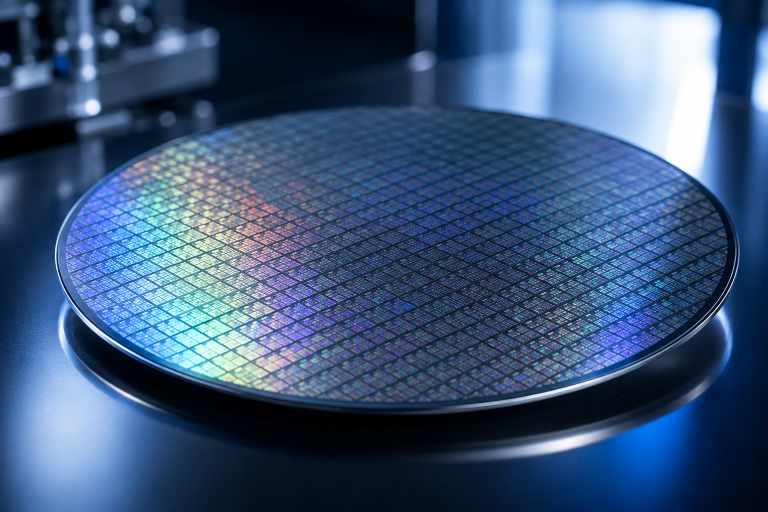
Unlike LCD panels built on glass substrates, Micro-OLED deposits organic OLED pixels directly onto a single-crystal silicon wafer — the same semiconductor material used for computer chips. This groundbreaking structure enables an ultra-high pixel density of 3,500 to over 4,000 PPI, several times higher than traditional VR LCDs. Even on a chip the size of a fingernail, Micro-OLED can easily deliver 3K or even 4K resolution per eye.
Constrained by outdated manufacturing processes, traditional LCD panels suffer from inherent limitations. Users frequently encounter the “screen door effect”, blurry text edges, and lost fine details. Fast camera movements also cause noticeable motion blur and halo artifacts, severely holding back the visual experience and product premium of mainstream VR devices.
The performance gap is equally obvious in PPD (Pixels Per Degree), the core metric for retinal-level visual clarity. The Meta Quest 3 and similar LCD-based headsets only reach approximately 25 PPD. In contrast, the 4K Micro-OLED panels on the Apple Vision Pro achieve over 40 PPD, peaking near 60 PPD — delivering visuals that closely match the resolving power of the human eye.
From a consumer perspective, the most transformative improvement of Micro-OLED headsets is the complete elimination of the screen door effect. High-precision gaming, immersive video content, and detailed virtual environments all appear razor-sharp, ultra-transparent, and rich in tonal depth, with distinct layering between bright and dark scenes.
Beyond visual quality, Micro-OLED also enables lighter, thinner headset designs. Traditional LCD setups require stacked layers including a backlight unit and liquid crystal layer on thick glass substrates, making front headset housings bulky and heavy. Micro-OLED chips are compact (fingernail-sized) and ultra-thin by design, significantly reducing overall headset weight. This drastically minimizes neck strain during extended wear sessions.

2. Why Micro-OLED Is Regarded as the Ultimate VR Display Solution
Micro-OLED technology resolves several long-standing industry pain points that have plagued VR development for decades, earning its reputation as the future of immersive display technology.
Elimination of the screen door effect: Traditional VR places displays extremely close to the user’s eyes, making the tiny gaps between LCD pixels highly visible and creating a mesh-like overlay. Micro-OLED’s microscopic pixel size eliminates this issue entirely, producing seamless, lifelike visuals indistinguishable from real-world vision.
Genuine pure black performance: Dark-space simulations, sci-fi environments, and night-mode gameplay are core VR use cases. LCD panels cannot fully block backlight output, resulting in washed-out, grayish blacks. Micro-OLED pixels are self-luminous and can power down completely when displaying black, delivering true inky blacks and vastly enhanced immersion for dark-scene content.
Extreme lightweight design: The miniature form factor of Micro-OLED microchips pairs perfectly with pancake folding optical lenses. This combination drastically reduces the thickness and overall weight of modern VR headsets, solving the bulkiness issue that has long compromised user comfort.
Near-zero latency to reduce motion sickness: Micro-OLED features microsecond-level response times, effectively eliminating motion blur and frame smearing during fast scene transitions. This significantly reduces VR motion sickness, making immersive content accessible to users who are sensitive to 3D visual movement.
3. Representative Micro-OLED VR/AR Products on the Market
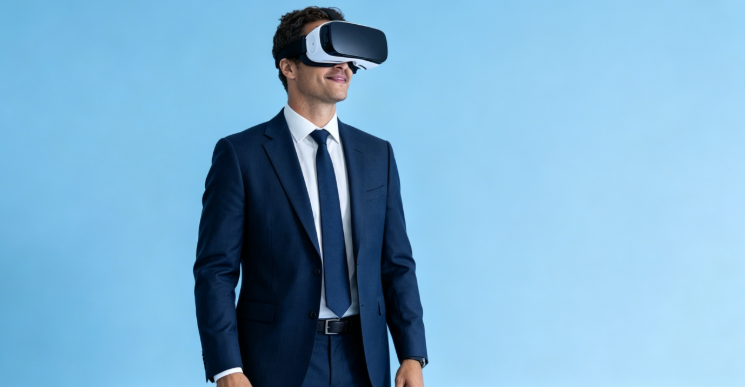
Apple Vision Pro: Equipped with dual custom Sony 4K Micro-OLED displays, delivering industry-leading color accuracy, contrast, and ultra-fine resolution for premium mixed-reality experiences.
Pimax Crystal Super (Micro-OLED Edition) & Pimax Dream Air: Enthusiast-grade PCVR headsets with native 4K resolution per eye, optimized for high-end simulation gameplay including flight simulation, racing, and space exploration titles.
Samsung Galaxy XR: Samsung’s flagship Android XR headset, featuring high-performance 4K Micro-OLED micro-displays for polished consumer-grade immersive experiences.
4. Key Drawbacks of Micro-OLED Technology
Despite its overwhelming performance advantages, Micro-OLED still faces significant commercialization challenges, primarily rooted in high production costs and low manufacturing yield.
According to BOM (Bill of Materials) teardown reports from authoritative industry analysts Wellsenn XR and TechInsights, the twin custom Sony Micro-OLED displays inside the $3,499 Apple Vision Pro account for $300 to $350 of the device’s total production cost. For comparison, the traditional LCD panel used in the Meta Quest 3 costs merely $30 to $40.
Industry supply chain reports further confirm that Sony faced extremely low yield rates during initial production of Apple’s custom 1.42-inch ultra-high-PPI Micro-OLED wafers. A large number of finished chips were discarded due to tiny dust particles and microscopic pixel defects, leading to early-stage stock shortages and the device’s prohibitive retail price.
Additionally, optical loss poses another critical challenge. While Micro-OLED chips can output high native brightness, pancake lenses absorb over 80% of light during refraction and transmission. This reduces the effective brightness reaching the user’s eyes to only 500–750 nits.
To ensure clear visibility in bright daylight environments, manufacturers must drive the display chips with elevated current to boost brightness, which in turn causes sharp increases in power consumption and heat generation. To tackle this bottleneck, industry leaders are adopting MLA (Microlens Array) technology, which improves front luminous efficiency by 2–3 times and has become the core technical path to resolve Micro-OLED’s power and heat limitations.
References
TechInsights. (2026). Wearables Market Dynamics and Sensor Innovation Analysis.
Wellsenn XR. (2025). XR Industry Hardware Cost Analysis: Apple Vision Pro BOM Breakdown.
Optica Publishing Group. (2025). Enhancing Virtual Reality Optical Efficiency via Emission Cone Optimization.
Dataintelo. (2026). Global Micro-OLED Market Research Report: Growth Trends & Yield Challenges.
MicroLED Industry Association. (2024). State of the Micro-Display Industry & Future Roadmap.
IDC. (2026). Worldwide AR/VR Headset Tracker & Market Forecast.
IEEE Spectrum. (2025). The Semiconductor Challenge: Fabricating Micro-Displays on Silicon Wafers.
DisplayMate. (2025). Advanced Display Performance Assessment: Retina-Level Resolution in XR.
Counterpoint Research. (2026). XR Ecosystem Analysis: Why 4K Micro-OLED is the New Premium Standard.
Apple Developer Documentation & Technical Specifications. (2024). Vision Pro Display Architecture Overview.
About the Author
Leo Harrison has over a decade of experience in the East Asian display supply chain and display semiconductor industry, specializing in smart hardware architecture and display technology evaluation.
Review Team
Review Team:
Special technical review and engineering validation provided by the Pengsheng Technology R&D Division.