Shenzhen Pengsheng MicroVision Tech Co., Ltd.
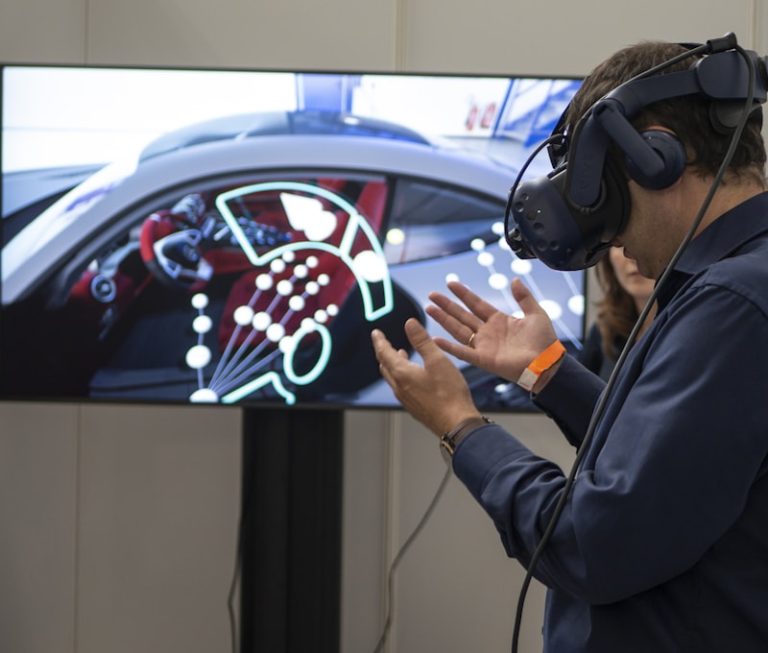

These three technologies dominate displays for TVs, monitors, and XR headsets today.
Core Technical Comparison
💡 Mini LED (Mini Light-Emitting Diode)
Working Principle
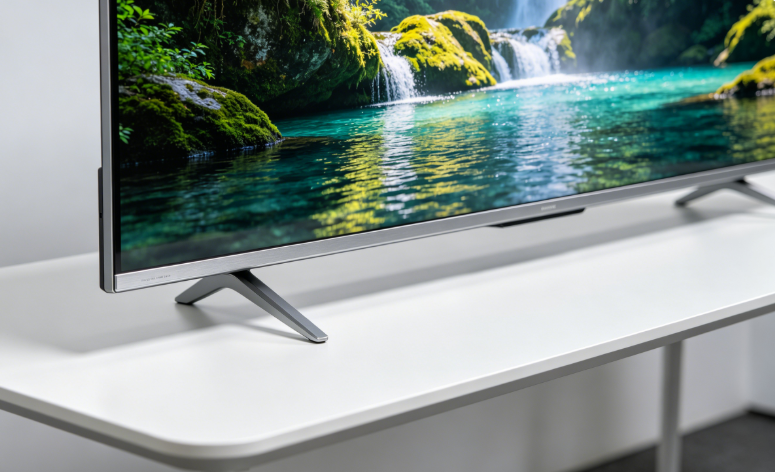
It represents the peak performance upgrade for conventional LCD panels. Standard LCD TVs rely on only dozens of large backlight bulbs, whereas Mini LED backlight systems utilize tens of thousands of tiny LED chips.
Light Control
Mini LED leverages Full-Array Local Dimming. The screen is segmented into hundreds to thousands of independent zones that adjust brightness separately, delivering drastically boosted contrast ratios.
Pros & Cons
- Advantages: Exceptional peak brightness, zero permanent burn-in, and relatively manageable manufacturing costs
- Drawback: Zone-based dimming causes blooming — a faint glow around bright elements like movie subtitles against dark backgrounds.
🔮 OLED (Organic Light-Emitting Diode)
Working Principle
A true pixel-level self-emissive technology. Every single pixel illuminates independently without a separate backlight layer. A typical 4K TV houses roughly 8.3 million individual pixels.
Light Control
Pixel-perfect light regulation. Pixels power down completely to render true absolute black, resulting in infinite native contrast ratios.
Pros & Cons
- Advantages: Vivid, saturated color reproduction, zero motion blur, and no blooming artifacts
- Drawbacks: Lower maximum brightness than Mini LED, plus risk of permanent burn-in from prolonged static imagery.
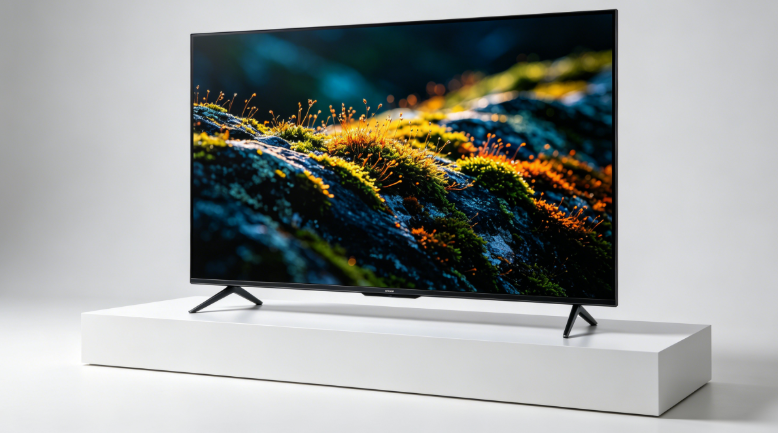
Modern high-end Mini LED and QD-OLED panels achieve stunning color accuracy thanks to an integrated quantum dot film. This layer drastically elevates the purity of red, green, and blue primaries, pushing DCI-P3 wide color gamut coverage above 95%.
👑 Micro LED (Micro Light-Emitting Diode)
Working Principle
It merges Mini LED’s high brightness and long lifespan with OLED’s pixel-level self-emissive design. The highly sophisticated manufacturing process places millions of micrometer-scale inorganic LED chips to form individual pixels.
Light Control
Like OLED, it delivers pixel-level self-emission. Single pixels shut off entirely to produce perfect, zero-glow black levels and infinite contrast.
Pros & Cons
Near-flawless performance across all metrics: higher peak brightness than Mini LED, purer color volume than OLED, ultra-fast response speeds, and complete immunity to burn-in.
Its single critical downside is prohibitively complex fabrication and steep production costs. The core cost driver is mass transfer — the ultra-precise process of moving millions of microscopic LED dies onto a driver wafer without damage. Even a 0.001% error rate during this transfer creates widespread dead pixels across the panel.
Side-by-Side Spec Comparison Chart
| Feature / Technology | Mini LED (Premium LCD) | OLED (Self-Emissive Organic) | Micro LED (Ultimate Display Solution) |
|---|---|---|---|
| Light Emission Mechanism | Tens of thousands of LEDs for segmented backlighting | Individual self-luminous organic pixels | Individual self-luminous inorganic microchips |
| Black Level Performance | Good (minor blooming halo effect) | Flawless true black, zero bloom | Flawless true black, zero bloom |
| Peak Brightness | Extremely high (2,000–4,000 nits) | Moderate (800–1,500 nits typical) | Industry-leading (5,000+ nits) |
| Color Saturation | Excellent | Exceptional | Gold-standard maximum saturation |
| Burn-In Risk | None | Present (mitigated via updated panel tech) | None |
| Current Price Tier | Budget to mid-high range | Mid to premium range | Exorbitantly expensive (tens to hundreds of thousands USD) |
Buying & Application Guide
Living Room Large-Screen TVs
- Tight budget / Extra bright sunlit rooms: Choose Mini LED. Its high brightness holds up against direct sunlight, ideal for HDR blockbusters and high-refresh gaming.
- Cinema-grade picture / Nighttime movie viewing: Opt for OLED. In fully dark environments, its inky black depths and seamless contrast deliver unmatched immersive viewing.
- Unlimited budget, absolute top-tier visuals: Select Micro LED (e.g., Samsung The Wall).
Desktop Monitors & Tablets (iPad)
- Heavy static workloads (web browsing, coding, office work): Mini LED is the safer long-term pick with zero burn-in risk.
- Professional graphic design / Hardcore gaming: OLED’s precise color accuracy and near-instant response times elevate creative workflows and competitive gameplay.
VR / AR Headset Hardware
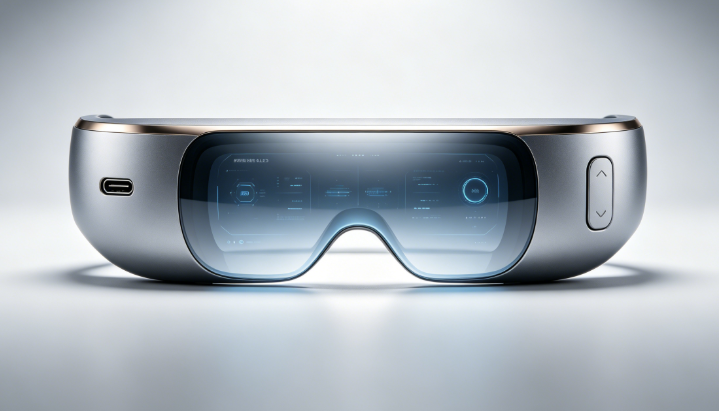
Flagship consumer headsets such as the Apple Vision Pro use Micro-OLED (silicon-based OLED), a micro-display variant built by depositing OLED pixels directly onto semiconductor silicon wafers.
Leading display research firm TrendForce states in its latest industry report that single Micro LED TV modules 130 inches and larger cost over 20 times more to manufacture than equivalent-size Mini LED panels.
While Samsung’s The Wall lineup hits peak brightness up to 10,000 nits and eliminates burn-in entirely, Micro LED technology remains an ultra-luxury product limited to commercial installations and high-net-worth consumers for the foreseeable future.
References
- TrendForce. Global Micro LED and Mini LED Display Market Analysis & Technology Cost Roadmap
- DisplayMate Technologies. Advanced Display Performance Evaluation: OLED vs. LCD Dynamic Contrast Standards
Industry benchmark specifications covering pixel-level self-emission, absolute black calibration, and HDR contrast testing protocols - Society for Information Display (SID). Journal of the SID: Quantum Dot Efficiency and Local Dimming Halo Artifacts in HDR Displays
Peer-reviewed research analyzing blooming side effects from Mini LED zone dimming, plus quantum dot film physics for expanded wide color gamut - RTINGS Lab. Real-World Accelerated Longevity and Burn-In Test Database for Next-Gen TV Panels
- IHS Markit / Omdia. Display Long-Term Demand and Supply Tracker
- Video Electronics Standards Association (VESA). DisplayHDR and Response Time Measurement Standards for Gaming Monitors
Official certification rules covering self-emissive panel latency, motion blur suppression, and high-refresh gaming displays - Samsung Electronics Tech Blog. The Wall Engineering: MicroLED Pixel Pitch and Modular Display Scalability
- IEEE Spectrum. The Mass Transfer Dilemma: Moving Millions of Microscopic LEDs to Silicon Backplanes
- Yole Développement. MicroLED & MicroOLED Displays: Technology and Market Trends
- Apple Developer Documentation. Understanding Spatial Computing Displays: Vision Pro Hardware Integration
Official Apple engineering specs detailing custom micro-display architecture, color management pipelines, and eyebox coverage parameters
About the Author
Leo Harrison has over a decade of experience in the East Asian display supply chain and display semiconductor industry, specializing in smart hardware architecture and display technology evaluation.
Review Team
Review Team:
Special technical review and engineering validation provided by the Pengsheng Technology R&D Division.