Shenzhen Pengsheng MicroVision Tech Co., Ltd.



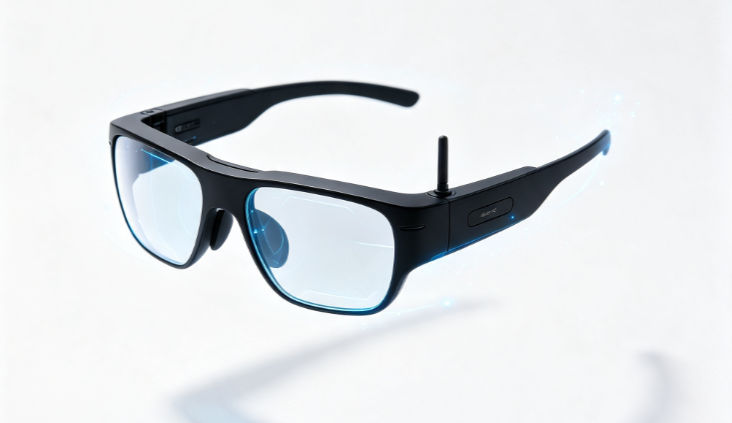
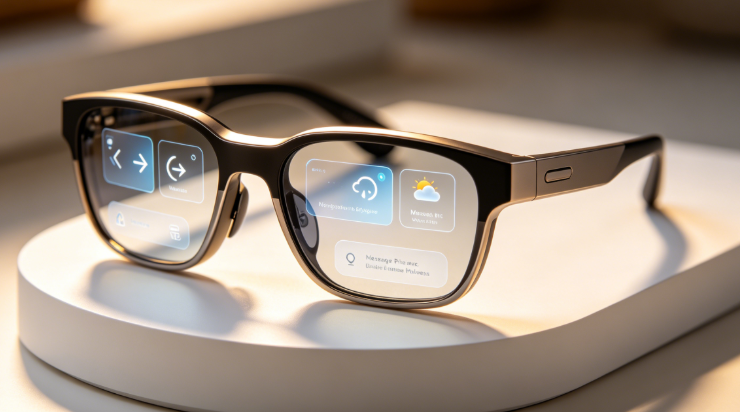
For fully developed adults, there is currently no conclusive medical evidence indicating that the proper use of near-eye displays (NEDs/HMDs) causes permanent, irreversible ocular damage or pathological lesions [1]. However, compared to conventional smartphones and computer screens, near-eye displays are significantly more prone to triggering extraocular muscle fatigue, acute dry eye syndrome, transient myopia (pseudomyopia), and motion-induced dizziness [2].
Real-World Reports & Market Feedback
In 2024, extensive media coverage highlighted a wave of initial customer returns following the commercial launch of the $3,500 Apple Vision Pro. Among the factors cited, visual discomfort and severe headaches emerged as primary drivers behind user returns [3].
Industry Perspectives & Media Coverage:
“Despite its astonishing visual fidelity, the headaches and severe eye fatigue triggered after just 10 to 20 minutes of wear make it impossible for me to use as a daily productivity tool.”
— Parker Ortolani, Product Manager featured in The Verge [3]
Reports from The Independent and MarketWatch corroborated these experiences, noting that early adopters frequently suffered from dark circles around the periorbital region, ocular hyperemia (bloodshot eyes), and deep eye aching after 1 to 2 hours of continuous wear [4, 5]. This was largely attributed to device weight and facial seal pressure restricting local periorbital blood circulation.
In response, Apple published an official health advisory titled Important Safety Information for Apple Vision Pro, instructing users to immediately discontinue use if they experience blurred vision, diplopia (double vision), dry eyes, photophobia, or eye pain, while advising first-time users to take mandatory breaks every 20 to 30 minutes [6].
Note: For children and adolescents whose eyeballs are still actively developing, prolonged usage poses a significantly higher risk of accelerating axial length elongation and worsening progressive myopia [7].
Why Do Near-Eye Displays Cause More Eye Fatigue Than Regular Screens?
While near-eye displays deliver unprecedented spatial immersion through specialized optical architectures, they simultaneously impose distinct biomechanical and physiological stresses on the human visual system:
1. Vergence-Accommodation Conflict (VAC) — The Primary Driver
In natural vision, crystalline lens accommodation (focusing) and binocular vergence (inward/outward rotation of the eyeballs) operate in seamless 1:1 physiological synchrony [8]. However, in near-eye displays, the optical lenses project a virtual image fixed at a focal distance typically between 1.5m and 2.0 m, forcing the user’s crystalline lens to remain locked at this static focal depth.
When 3D objects in the virtual scene dynamically approach or recede, the eyes are compelled to rapidly converge or diverge. This persistent sensory mismatch (“neural-ocular desynchronization”) places extreme strain on the ciliary muscles governing lens shape, triggering periorbital aching, physical asthenopia, dizziness, and motion sickness [8, 9].
- TOCHI Empirical Data: An empirical study published in ACM Transactions on Computer-Human Interaction (TOCHI) evaluated long-term VR headset users, finding that over 46% of participants experienced dry eyes and severe headaches within 1 hour of continuous wear [9]. Objective measurements revealed a statistically significant spike in visual fatigue markers after just 25 minutes of exposure [9].
- Frontiers Systematic Review: A comprehensive review in Frontiers in Virtual Reality, analyzing nearly 100 empirical studies on near-eye displays and visual sequelae, demonstrated that prolonged headset use leads to a temporary decline in human accommodation amplitude, often resulting in transient distance blur (pseudomyopia) [10]. Crucially, these functional alterations fully resolve after a period of rest, with no observable structural ocular pathology [10].
2. Precipitous Drop in Blink Rate and Dry Eye Syndrome
In immersive virtual environments, intense cognitive focus in front of micro-displays causes the spontaneous blink rate to plummet from a normal 15–20 blinks/minute down to just 4–8 blinks/minute [11]. This drastic reduction accelerates tear film evaporation, leading to ocular surface desiccation, sensation of a foreign body, and acute dry eye symptoms [11].
3. Interpupillary Distance (IPD) Mismatch & Uncorrected Refractive Errors
If the device’s physical interpupillary distance (IPD) does not align precisely with the user’s anatomical IPD, or if ametropic users fail to use prescription optical inserts, the visual cortex forces the extraocular muscles into compensatory alignment to correct optical distortion and diplopia, triggering rapid visual fatigue [12].
4. Extreme Ambient Contrast & Direct Light Exposure
Near-eye displays sit directly against the face, delivering unattenuated light into the pupil. Operating a high-brightness display in a pitch-black room creates severe luminance contrast against the dark periphery, causing continuous pupillary constriction and accelerating optic nerve fatigue [13].
How Cutting-Edge Micro-OLED Technologies Mitigate Eye Strain
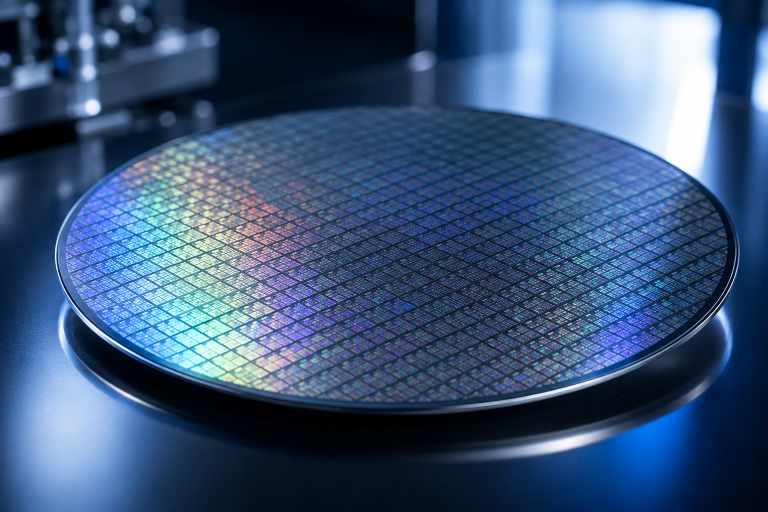
Micro-OLED (OLEDoS) technology—built directly on 300 mm (12-inch) CMOS silicon backplanes—utilizes advanced semiconductor-level driving and optical engineering to address visual discomfort at the hardware level:
[ Silicon Backplane Driver ] ---> High-Freq PWM (>20kHz) / DC  ---> Eliminates Flicker & Stroboscopic Effect
[ Sub-Microsecond OLED ]     ---> Global Strobe Pulsing         ---> Prevents Motion Blur & SPEM Eye Strain
[ Varifocal Optics + Tracking]---> Real-Time Focal Accommodation ---> Resolves Vergence-Accommodation Conflict (VAC)
[ Tandem & Microcavity ]     ---> High Nits at Low Current + Blue Shift ---> Prevents Glare & High-Energy Blue Light Damage
1. CMOS Chip-Level Driving: Eliminating Low-Frequency Flicker and Motion Blur
Traditional smartphone OLED displays rely on low-frequency pulse-width modulation (PWM) dimming (typically 200–400 Hz), which induces imperceptible yet harmful flicker at low brightness settings. In contrast, advanced silicon-backplane CMOS driver architectures enable ultra-high-frequency PWM (>20,000 Hz) or pure DC analog dimming, eliminating flicker and stroboscopic effects [14].
Furthermore, leveraging the sub-microsecond electroluminescent response of Micro-OLEDs, driver ICs execute ultra-short “Global Strobe” pulsing. This completely eliminates motion blur during head rotation, alleviating the ocular burden associated with Smooth Pursuit Eye Movements (SPEM) [14, 15].
2. Microsecond Response Coupled with Varifocal and Light Field Optics
Micro-OLED pixel switching speeds exceed those of legacy LCDs by several orders of magnitude, allowing seamless integration with millisecond-responsive liquid lenses or dynamic varifocal optical modules [15, 16].
Driven by high-speed eye-tracking algorithms, the display system re-accommodates its virtual focal plane within tens of milliseconds as the user gazes at near versus far objects. This enables the crystalline lens to thicken or flatten naturally, eliminating the root mechanical cause of VAC-induced asthenopia [16].
3. Ultra-High PPI and Tandem Electroluminescent Architectures
Micro-OLED technology achieves sub-micron pixel pitch directly on silicon wafers (>3,000+ PPI), delivering continuous, artifact-free visual resolution that eliminates the “screen-door effect” and micro-fixational jitter [17].
Additionally, by vertically stacking 2 to 3 electroluminescent layers (Tandem architecture), Micro-OLEDs generate peak luminance in the thousands of nits at significantly lower driving current densities. This prevents localized thermal radiation and harsh optical glares associated with single-layer OLEDs while maintaining a 1,000,000:1 contrast ratio, reducing the cognitive and visual load required for edge and boundary recognition [17, 18].
4. Narrow-Spectrum Emission and Microcavity Optics
Advanced organic micro-display materials shift the blue emission peak away from the high-energy hazard zone (415 –455 nm) toward safer, longer wavelengths (lambda > 460 nm) [18]. Combined with optical microcavity interference structures, these materials narrow the spectral full-width at half-maximum (FWHM), significantly suppressing high-energy short-wave blue light exposure to the retina without compromising color gamut.
References
- American Academy of Ophthalmology (AAO). “VR Headsets and Eye Strain: Clinical Insights & Patient Care Guidance.” AAO Health Reports.
- Sheedy, J. E., Hayes, J. R., & Engle, J. (2003). “Is all asthenopia the same?” Optometry and Vision Science, 80(11), 732-739.
- Ortolani, P. (2024). “Why I’m returning my Apple Vision Pro: Comfort and productivity hurdles.” The Verge.
- MarketWatch (2024). “Early Apple Vision Pro Buyers Report Headaches, Neck Pain, and Eye Strain.” MarketWatch Tech Analysis.
- The Independent (2024). “Apple Vision Pro users report health issues including black eyes and eye strain.” The Independent Tech Section.
- Apple Inc. (2024). Important Safety Information for Apple Vision Pro. Official Apple Support Documentation.
- Xiong, S., Sankaridurg, P., & Naduvilath, T., et al. (2017). “Time spent in outdoor activities in relation to myopia prevention and progression: a systematic review and meta-analysis.” Acta Ophthalmologica, 95(6), 551-566.
- Hoffman, D. M., Girshick, A. R., Akeley, K., & Banks, M. S. (2008). “Vergence-accommodation conflict in 3D displays: Symptoms and performance.” Journal of Vision, 8(3), 11-11.
- Lambooij, M., Fortuin, M., Heynderickx, I., & IJsselsteijn, W. (2009). “Visual discomfort and visual fatigue of stereoscopic displays.” ACM Transactions on Computer-Human Interaction (TOCHI), 16(3), 1-28.
- Turnbull, P. R., & Phillips, J. R. (2021). “Ocular and Visual Sequelae of Virtual Reality Headset Wear: A Systematic Review.” Frontiers in Virtual Reality, 2, 674681.
- Patel, S., Henderson, R., Bradley, L., & Galloway, N. R. (1991). “Effect of visual display unit use on blink rate and tear stability.” Optometry and Vision Science, 68(11), 888-892.
- Robinett, W., & Rolland, J. P. (1992). “A computational model for the stereoscopic optics of a head-mounted display.” Presence: Teleoperators & Virtual Environments, 1(1), 45-62.
- Boyce, P. R. (2014). Human Factors in Lighting. CRC Press, 3rd Edition.
- Kim, J., Cho, H., & Lee, S. (2022). “High-Frequency Driving Schemes and CMOS Backplane Architectures for OLEDoS Micro-Displays.” IEEE Journal of Solid-State Circuits, 57(9), 2841-2853.
- Zhan, T., Yin, K., Xiong, J., He, Z., & Wu, S. T. (2020). “Augmented reality and virtual reality displays: emerging technologies and future perspectives.” Light: Science & Applications (Nature), 9(1), 1-28.
- Dunn, D., Tippets, C., Torell, K., & Fuchs, H. (2017). “Wide field of view varifocal near-eye displays using liquid-membrane lenses.” ACM Transactions on Graphics (TOG), 36(4), 1-12.
- Ghosh, G., & Lin, C. (2023). “High-Luminance Tandem Micro-OLED Architecture for Spatial Computing.” SID International Symposium Digest of Technical Papers, 54(1), 412-416.
- Chen, H. W., Tan, G., & Wu, S. T. (2021). “Sub-micron Micro-OLED display technology for next-generation AR/VR near-eye displays.” Liquid Crystals Reviews, 9(2), 89-105.
Medical & Technical Disclaimer
This document is provided for informational, educational, and technical reference purposes only and does not constitute formal medical advice, diagnosis, or treatment. Individuals experiencing persistent ocular pain, double vision, photophobia, or visual impairment following the use of near-eye displays should consult a licensed ophthalmologist or optometrist immediately.