
Description: An in-depth breakdown of the 5 core enterprise categories driving demand for Micro-OLED, Micro-LED, and LCoS integration—featuring real-world case studies from Garmin, Intuitive Surgical, Pulsar, Even Realities, and ActiveLook.
In 2026, spatial computing, extended reality (XR), and smart wearable devices have gained massive traction across TikTok and YouTube, generating viral online content. Against this backdrop, micro display technology is rapidly transitioning from specialized use applications toward mass market consumer and industrial segments.
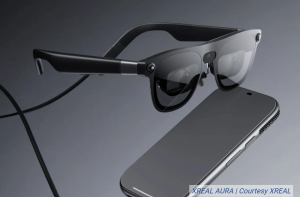
Take AR smart glasses as representative examples: recent commercial offerings include the XREAL Air 2 / Air 2 Pro (featuring 0.55 inch Micro OLED panels), Rokid Max / Max 2, RayNeo X2 / X2 Lite, Microsoft HoloLens 2 (LCoS plus waveguide architecture), and Magic Leap 2. According to IDC and Counterpoint industry datasets, global AR hardware shipments have surpassed one million units, with a projected compound annual growth rate (CAGR) exceeding 35 % for the 2024 2028 timeframe.
Why the Market Needs Micro Display Integration and Supply Chain Services
Silicon based Micro OLED and Micro LED constitute irreplaceable hardware foundations for near eye display hardware, whose shipment volumes have surged year over year. This trend has fueled growth among optical component vendors and given rise to specialized micro display integration solution providers.
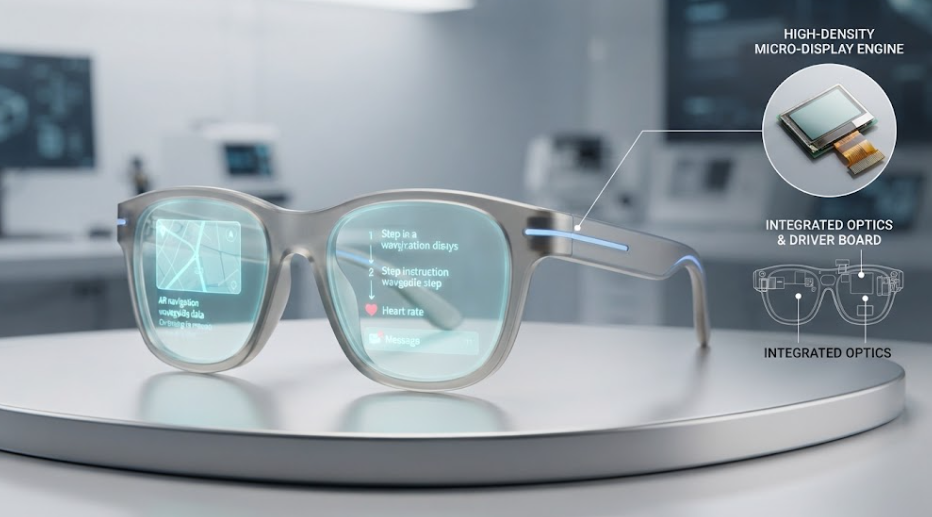
Contrary to common assumptions, micro display products cannot be assembled simply by procuring bare display panels; substantial technical barriers persist. End to end development demands CMOS backplane design, optical path matching for miniature optical engines (including Birdbath, waveguide, free form optics), high precision chip bonding, plus sophisticated thermal management and power consumption tuning. Such development workflows involve long lead times and narrow error margins. Firms without in house optical engineering teams face substantial financial risk and potential project losses when attempting independent R&D.
Compounding this challenge is a highly fragmented upstream supply ecosystem. Foundry wafer fabs, display panel manufacturers, driver IC design houses, and optical module makers operate across discrete nodes within the value chain. Many small to mid sized enterprises therefore depend on dedicated micro display integration and supply chain services.

1. AR / VR / Smart Glasses Startups and Brand Owners
Numerous AR, VR and smart glasses startups possess robust hardware design or algorithm capabilities yet lack hands on experience in optical engine development and optoelectronic system integration.
Germany based Even Realities illustrates this profile. Its flagship G1 smart glasses weigh merely 39 grams, engineered for extreme lightweight ergonomics and minimalist form factor, targeting real time AI teleprompter, live translation and navigation workloads. The company demonstrates strong industrial design competence alongside mobile oriented large language model software capabilities.
Nevertheless, it lacks internal expertise in panel to optical module alignment and high density driver board development (MIPI / Type C conversion). Building a full stack internal team incurs heavy payroll and R&D overhead, inflates organizational scale, and slows new product iteration cycles. Third party micro display integration services fill these critical capability gaps.
2. Established Consumer Electronics and Smart Hardware Manufacturers
Legacy consumer electronics firms are racing to capture smart wearable market opportunities. While they can diversify into near eye and micro display products — such as FPV drone goggles, digital camera electronic viewfinders (EVF), and outdoor wearable terminals — building an optical supply chain from scratch drives up expenses and extends development timelines.
Senior leadership frequently prefers proven turn key “panel optics driver” integrated subsystems. Leveraging mature supply chain resources accelerates mass production readiness, shortens time to market, and mitigates competitive obsolescence risks.
Garmin, the prominent outdoor GPS and sports watch vendor, exemplifies this strategy. Garmin sought sunglasses mounted heads up display (HUD) hardware for cycling enthusiasts, delivering real time heart rate, cadence and navigation readouts. Garmin already excels in sensor hardware and athletic data processing but possessed zero in house near eye projection expertise. The company sourced compact high brightness micro display panels and prism light guide modules from external solution partners, packaged within a compact 29.7 gram waterproof housing. Low power display driver hardware supplied by integration vendors enables data rendering transmitted from Garmin cycle computers via the ANT+ protocol.
3. Industrial, Medical and Special Purpose Equipment OEMs & System Integrators
This segment manufactures high complexity hardware including infrared thermal imaging cameras, minimally invasive surgical AR visor helmets, and industrial inspection AR viewers. End customers accept significant price premiums for these products. Procurement requirements are highly specialized: order volumes tend to be low with multi batch high mix custom builds, alongside stringent environmental reliability specifications.
These OEMs require relief from high minimum order quantity (MOQ) thresholds enforced by chip and panel suppliers, multi year (5 10 year) end of life component continuity guarantees, responsive after sales support, plus custom enclosure and packaging with IP rated environmental sealing.
Augmedics and Intuitive Surgical serve as prominent case studies. Flagship offerings cover the FDA cleared Augmedics Xvision Spine System (AR guided spinal surgery helmet) and the 3D vision subsystem for Intuitive Surgical’s da Vinci surgical robot.
Medical device FDA / CE certification typically consumes two to three years. Once certifications are granted, micro display component part numbers cannot arbitrarily be altered. For minimally invasive interventions demanding precise neurovascular discrimination, displays must deliver ultra high resolution with near zero latency. Certified suppliers must sustain long term component supply post qualification.
4. Automotive AR HUD and Surveillance Night Vision System Suppliers
Vendors building automotive AR HUD hardware and high magnification outdoor night vision devices require micro display subsystems optimized for high brightness daylight operation and robust thermal dissipation.
Supplier evaluation criteria are well defined: high brightness display tuning, monolithic thermal module integration, automotive grade component qualification, plus full lifecycle component traceability.
Pulsar’s Thermion and Merger premium thermal imaging riflescopes and binocular viewers represent real world implementations. System requirements include fine tuning Micro OLED drive parameters: units deploy 0.39 inch / 0.49 inch silicon based OLED displays (1024 × 768 / 1920 × 1080 native resolution). Integration partners calibrate gamma response and contrast performance especially within low gray scale ranges. Micro display assemblies and eyepiece lens stacks are hermetically sealed within nitrogen purged magnesium alloy housings rated IPX7 waterproof, qualified for operating temperatures down to −25 °C.
5. Brands and Mid Tier Buyers Lacking Localized Supply Chain Resources
Many North American and European brands struggle to engage directly with Asia’s large yet fragmented ecosystem of panel fabs, wafer foundries, driver IC vendors, and OSAT (outsourced semiconductor assembly and test) houses. Reliable China based one stop integration partners deliver component sourcing, module assembly, rigorous pre shipment QA / QC validation, plus cross border technical support.
French sports focused AR developer ActiveLook / ENGO Eyewear builds ENGO 1 and ENGO 2 AR glasses targeted at marathon runners and cyclists. Europe suffers constrained domestic microelectronics and optical packaging manufacturing capacity at prohibitive cost levels, insufficient to support consumer volume mass production.
Accordingly, the brand prioritizes qualified Asian integration service providers leveraging mature regional supply chains to deliver fully tested integrated assemblies combining ultra low power micro display panels, compact driver PCBs, and reflective optical elements via OSAT workflows.
References
[1] IDC. Worldwide Quarterly Augmented and Virtual Reality Headset Tracker & Market Forecast.
[2] Counterpoint Research. Global XR & AR Smart Glasses Supply Chain and Shipment Analysis.
[3] Even Realities. G1 Smart Glasses Product Architecture and Lightweight Design Whitepaper.
[4] Garmin Ltd. Varia Vision In-Sight Display Optoelectronic Integration Technical Manual.
[5] U.S. Food and Drug Administration (FDA). Augmedics xvision-Spine System (XVS) 510(k) Clearance Regulatory Documentation.
[6] Intuitive Surgical. da Vinci Surgical System High-Definition 3D Endoscopic Vision Subsystem Overview.
[7] Pulsar Optics. Thermion & Merger Micro-OLED Display Calibration & Nitrogen-Purged Thermal Housing Specifications.
[8] SAE International. SAE J3178: Augmenting Head-Up Display (AR-HUD) Performance Standard for Automotive Applications.
[9] ActiveLook (MICROOLED). ActiveLook Ultra-Low Power Micro-Display Module Integration Guidelines.
[10] SEMI / IEEE. Micro-Display Packaging and OSAT Ecosystem Integration Technical Report.
Disclaimer
This content is compiled based on public technical documentation, market research reports, and commercial case studies for technical exchange and informational purposes only. It does not constitute commercial procurement, investment advice, or operational guidance. All brand names, trademarks, and product specifications belong to their respective owners.