Shenzhen Pengsheng MicroVision Tech Co., Ltd.



According to forecasts from leading market research firms including Omdia, Yole Group, and TrendForce, 2027 is projected to be a pivotal year for the large-scale commercial maturity of near-eye displays (NEDs) [1], [2], [3].
In its Near Eye Display for XR Application report and market tracking updates, Omdia noted: “Omdia remains optimistic about the long-term outlook as display, optical, and other component technologies continue to advance. Shipments of near-eye displays are expected to grow rapidly starting in 2027, reaching 92.9 million units by 2030.” — Kimi Lin, Senior Analyst, Display Research at Omdia [1].
Omdia also highlighted that Apple plans to upgrade to higher-brightness RGB OLEDoS (OLED-on-Silicon) microdisplays for its next-generation Vision Pro in 2027, replacing the first-generation WOLED with Color Filter (WOLED+CF) architecture. This technical shift is expected to catalyze a surge in mass production across the near-eye display market by 2027 [1].
Industry analysis from TrendForce indicates that economies of scale and yield improvements for Micro OLED (OLEDoS) will reach a tipping point between 2026 and 2027. Projections show that global Micro OLED shipments for XR (AR/VR/MR) applications will exceed 23 million units in 2027, with the market value for XR near-eye Micro OLEDs reaching $4.1 billion [2].
As technologies across silicon-based microdisplays, Micro LEDs, optical waveguides, and Pancake optics reach maturity, the market landscape in 2027 will feature explosive growth in consumer electronics alongside deep penetration into tactical and industrial sectors [3]. Shenzhen Pengsheng MicroVision Technology Co., Ltd. specializes in one-stop near-eye display solutions spanning a full range of Micro OLED displays (0.23” – 1.31”), waveguide/Pancake optical modules, driver boards, and upstream wafer customization. Leveraging rigorous component selection, EVK prototyping, and end-to-end supply chain management, the company fully supports the rapid deployment and volume delivery across the following top 10 application scenarios:
Top 10 Application Scenarios for Near-Eye Displays in 2027
1. Consumer Spatial Computing & AI + AR Smart Glasses
Consumer electronics represents the largest and fastest-growing downstream market for near-eye displays in 2027, with an estimated CAGR exceeding 25% [1], [7].
-
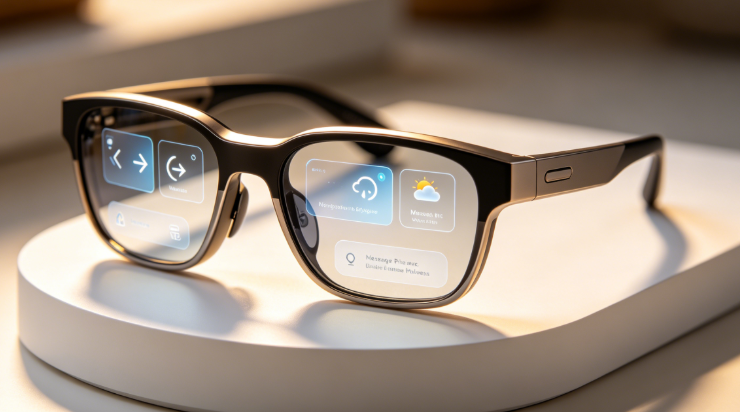
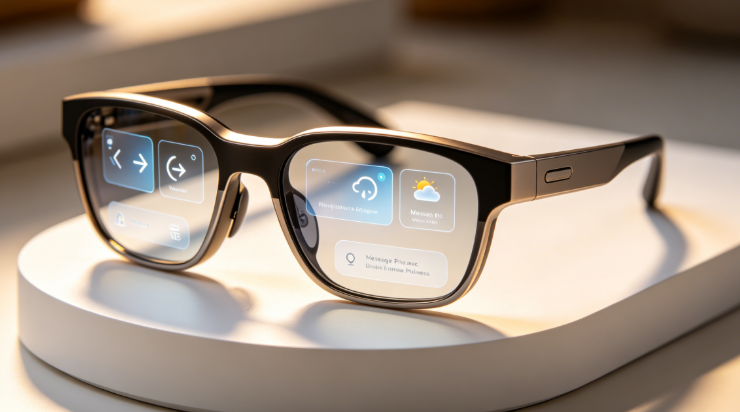
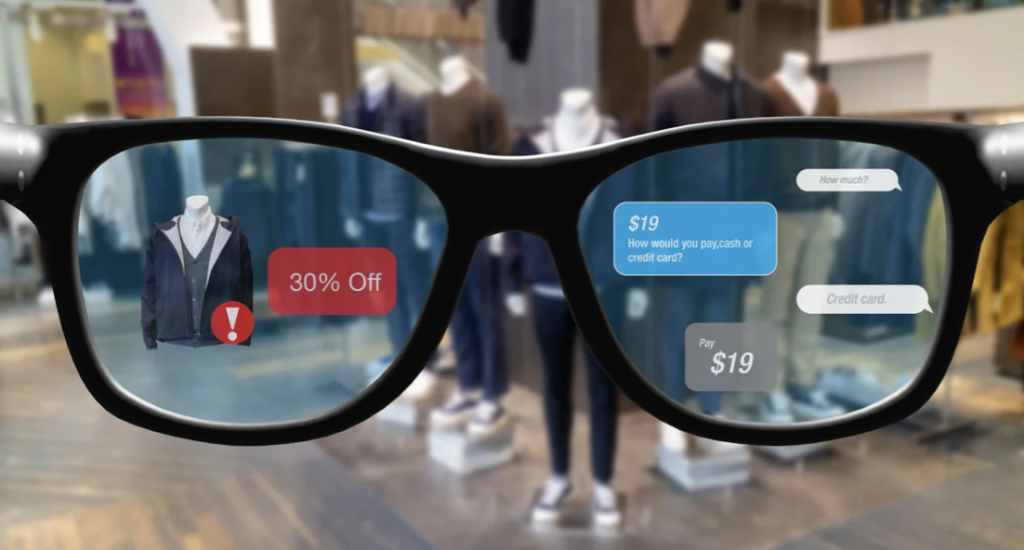
All-Day AI + AR Smart Glasses: Driven by yield breakthroughs in Micro LED and diffractive waveguide configurations, ultra-lightweight AR glasses (< 50g) will emerge in 2027 as the premier hardware interface for AI assistants, delivering real-time translation, heads-up navigation, and context-aware notifications.
-
Immersive Spatial Headsets (MR / VR): Featuring dual-eye 4K+ Micro OLED displays paired with Pancake optics, these devices will be widely adopted for 3D virtual theater experiences, spatial productivity, virtual networking, and AAA VR gaming.
2. Tactical Equipment, Outdoor Scopes & FPV Systems
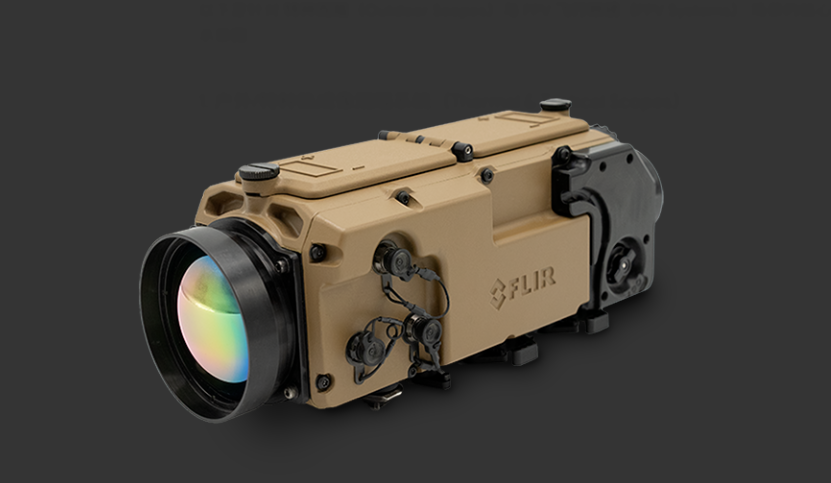
Tactical equipment, hunting/outdoor optics, and FPV drone piloting place stringent demands on display form factor, power efficiency, and response speed. For premium OEMs, this represents one of the most resilient and profitable market segments for Micro OLEDs [4].
-
Night Vision & Thermal Imaging Scopes: Defense and law-enforcement monocular/binocular thermal imagers and weapon sights require ultra-high PPI, extreme contrast ratios, and ultra-low power consumption.
-
FPV Goggles (Unmanned Aerial Systems): Control stations for FPV drones and aerial photography rely on near-eye displays to deliver ultra-low latency, high refresh rates (120Hz+), and exceptional color fidelity.
3. Industrial Operations, Manufacturing & Logistics
The industrial sector prioritizes hands-free workflow optimization. For large-scale manufacturing enterprises seeking cost reductions and operational efficiency, market demand is both substantial and urgent [10].
-
Remote Assistance & Equipment Maintenance: Field technicians wearing AR headsets can overlay real-time schematics and disassembly manuals onto machinery. Remote experts can project annotations in real time, serving as an ideal technical solution for global field service and aftermarket support for high-end machinery.
-
Smart Warehousing & Inspection: During logistics order picking and routine plant inspections, operators receive real-time barcode scanning prompts and spatial location guidance through near-eye displays, drastically minimizing error rates.

4. Surgical Assistance & Digital Diagnostics
Healthcare is widely projected to be one of the fastest-growing vertical markets for near-eye displays in 2027 [9].
1)AR Surgical Navigation Systems: Surgeons wearing high-resolution near-eye displays can superimpose 3D CT/MRI vascular and anatomical reconstructions directly onto the patient’s surgical field for precise, minimally invasive procedures. Technology seamlessly reduces cognitive load on surgical teams, improving precision and reducing human error.
Applications of Microdisplay Devices in High-Stakes Surgical Scenarios
1. Neurosurgery: Deep Skull Base Tumor Resection and Cerebral Arteriovenous Malformation (AVM) Surgery
The region surrounding the skull base and brainstem is densely packed with 12 pairs of cranial nerves and the Circle of Willis, where tumors often become tightly intertwined with these critical blood vessels and eloquent brain areas (such as speech and motor cortexes). In conventional procedures, surgeons must repeatedly look up from the operating microscope to review two-dimensional MRI slices, forcing them to mentally map out the 3D anatomical layout—a process that is mentally taxing and prone to spatial perception errors.
Under the AR Navigation Overlay Scenario:
Once the lead surgeon puts on a high-resolution AR headset, a semi-transparent mesh combining DTI tractography and 3D cerebrovascular reconstructions is directly overlaid onto the otherwise opaque brain tissue. The AR interface uses intuitive color-coding—such as red for feeder arteries, yellow for motor nerve tracts, and purplish-red for tumors—while clearly demarcating a 1 mm safe resection margin around the tumor boundary. As the scalpel or ultrasonic aspirator (CUSA) advances, the floating AR display provides real-time proximity warnings, indicating the exact distance between the instrument tip and underlying concealed major vessels to prevent accidental punctures that could trigger catastrophic hemorrhaging.
2)Ophthalmic & Neurological Rehabilitation: Near-eye display devices featuring high refresh rates and fine-tuned color temperature/brightness controls are utilized for amblyopia correction, vision recovery therapy, and psychological interventions.
5. Automotive Interfaces & Heavy Machinery Operation
-
Near-Field ADAS & HUD Evolution: Beyond traditional automotive HUDs, near-eye displays are expanding into teleoperation cockpits and enhanced-vision terminals for commercial vehicles, excavators, loaders, and heavy machinery
[8]. -
In-Vehicle Entertainment & Rear Cabin Systems: Integrated with vehicle infotainment ecosystems, AR/VR glasses offer passengers personalized virtual theater experiences on long journeys.
6. Professional Cinematography & Broadcasting (EVFs)
-
High-Precision Electronic Viewfinders (EVFs): In bright ambient outdoor lighting, camera LCD screens fall short for precise focus and exposure control. Utilizing 0.55” – 0.71” high-resolution Micro OLEDs as EVFs provides 1,000,000:1 contrast ratios, DCI-P3 wide color gamuts, and zero-latency response, faithfully rendering lens focus and optical depth
[6].
7. Aerospace & High-Fidelity Simulation Training
Flight & Tactical Simulators: Combining dual 4K+ Micro OLEDs with wide-FOV Pancake optics creates ultra-realistic simulator headsets [5]. Low persistence and extreme pixel density eliminate the screen-door effect and motion sickness, significantly reducing pilot training costs and flight risks.
Extreme Scenario: Nighttime Storm Carrier Touch-and-Go and Spatial Disorientation Recovery
In legacy VR simulators, the pervasive Screen Door Effect (SDE) severely impairs long-range target acquisition. Miles out, the optical landing system (the “meatball”) occupies merely a handful of pixels in the pilot’s field of view. The inter-pixel grid of conventional displays scatters these critical pixels into a pixelated mesh, preventing pilots from visually discerning glideslope deviations.
Furthermore, when severe turbulent gusts trigger rapid rolling maneuvers during a storm, the slow response times and display persistence of traditional LCD panels induce pronounced motion blur and smearing. This sensory conflict between the pilot’s vestibular system and visual cues triggers severe simulator sickness and spatial disorientation (vertigo), defeating the core purpose of muscle memory training.
Conversely, when powered by dual 4K+ Micro-OLEDs (OLEDoS) integrated with wide-field-of-view Pancake optics, this scenario achieves uncompromising photorealism. As the aircraft glides toward the carrier deck through pitch-black skies three miles out, the extreme pixel density (>4,000 PPI) of the microdisplays renders the distant, tiny green datum lights and orange glideslope indicator as razor-sharp, pure point-source lights, enabling pilots to instantaneously gauge glideslope errors.
Additionally, when switching to a Night Vision Goggle (NVG) perspective, the pixel-level self-emissivity of Micro-OLED renders the surrounding open sea in absolute, true black. Bright instrument phosphor and exterior lights produce authentic green blooming artifacts, faithfully replicating the restricted field-of-view and contrast degradation inherent to real-world NVG operations.
8. Outdoor Sports & Performance Optics
-
Cycling & Skiing Smart Eyewear: Leveraging compact 0.23” – 0.39” Micro OLED or Micro LED display modules, vital metrics—such as cadence, heart rate, turn-by-turn navigation, and incline—are projected into the athlete’s peripheral vision
[7]. Athletes no longer need to look down at cycle computers, drastically enhancing safety and athletic performance. -
Diving & Tactical Protective Masks: Integrating microdisplay modules inside diving masks displays water depth, elapsed time, and oxygen pressure warnings in real time, eliminating visual dead zones in high-risk underwater environments.
9. Assistive Technology & Visual/Auditory Rehabilitation
-
Low-Vision & Macular Degeneration Assistance: For patients with macular degeneration who suffer from central vision loss, camera-equipped Micro OLED headsets process captured scenes in real time—enhancing contrast, sharpening edge outlines, and re-projecting zoomed imagery onto functional peripheral retinal areas
[9]. -
AI Captioning Glasses for the Hearing Impaired: Integrating speech-to-text AI models with lightweight AR smart glasses allows individuals with hearing loss to view real-time conversational subtitles. This technology improves daily quality of life and empowers users to engage confidently in social activities.
10. Cultural Tourism, Exhibitions & Location-Based XR
-
Location-Based Entertainment (LBE): In VR arenas and theme parks, players wearing high-resolution near-eye display headsets can roam freely and interact across large physical spaces
[8]. -
Museums & Historical Reconstruction: Visitors wearing waveguide-based AR glasses can tour archaeological sites while ancient architecture and historical figures are seamlessly overlaid onto real-world ruins for immersive historical guided tours.
References
[1] Omdia Research. Near Eye Display for XR Application Report & Display Dynamics Tracker. Informa Tech, 2024–2026.
[2] TrendForce. Micro OLED & Near-Eye Display Market Analysis & Global XR Industry Forecast. TrendForce Press Center, 2025–2026.
[3] Yole Group. Status of the Display Industry & Microdisplays Report. Yole Intelligence, 2025.
[4] SPIE Digital Library. Proceedings of SPIE: Optics and Photonics for Near-Eye Displays & Waveguide Architectures, 2024–2026.
[5] IEEE Xplore. IEEE Transactions on Electron Devices – High-PPI Silicon Backplanes and OLEDoS Integration, 2025.
[6] Society for Information Display (SID). Journal of the Society for Information Display (JSID) – Micro-OLED EVF and High-Contrast Near-Eye Display Advances, 2025.
[7] Mordor Intelligence. AR & VR Smart Glasses Market – Growth, Trends, and Global Forecasts (2026–2031). Mordor Intelligence Reports, 2026.
[8] Counterpoint Research. Global Extended Reality (XR) Display Technology and Application Tracker, 2025–2026.
[9] Display Daily. XR in Healthcare and Specialty Markets: Near-Eye Displays in Surgical and Assistive Applications, 2025.
[10] ABI Research. Enterprise XR Hardware and Spatial Computing Market Data, 2025–2026.
Disclaimer
-
Information Purpose: Market projections, technical parameters, and industry analyses contained herein are intended solely for academic exchange, engineering component selection, and industrial trend evaluation. They do not constitute financial/investment advice or formal acceptance criteria for manufactured products.
-
Intellectual Property & Trademarks: All third-party market research reports (e.g., Omdia, TrendForce, Yole, SPIE, IEEE, SID) and brand/corporate names referenced in this document remain the intellectual property and registered trademarks of their respective owners. Their inclusion is strictly for objective industry analysis and does not imply direct endorsement or exclusive affiliation.
-
Market & Technical Variability: Commercialization timelines, yield rates, and market scale for near-eye displays (Micro OLED / Micro LED) and optical modules remain subject to global macroeconomic conditions and technological progress. For formal technical parameters, please refer to official datasheets and documentation issued by Shenzhen Pengsheng MicroVision Technology Co., Ltd. or original component manufacturers.