Shenzhen Pengsheng MicroVision Tech Co., Ltd.


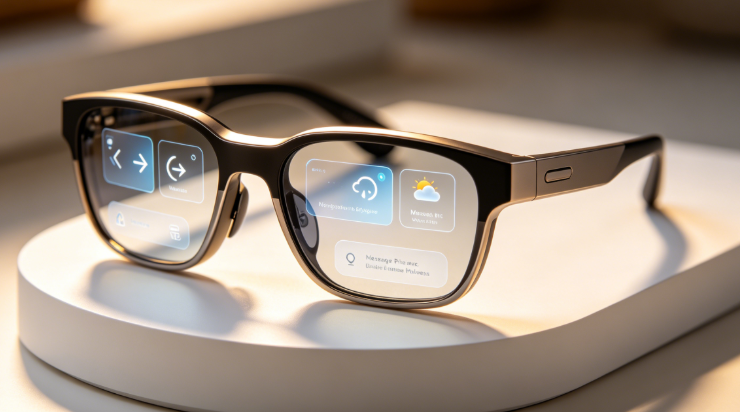

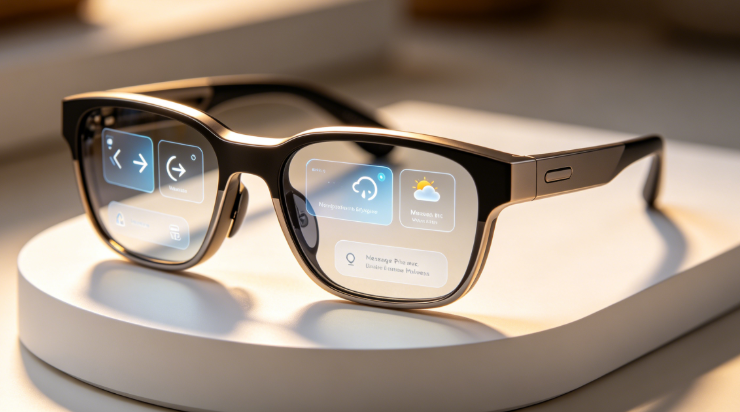
AR glasses are reaching a pivotal moment in their industry evolution—some tech influencers have even drawn parallels between their trajectory and that of the iPhone, expressing strong optimism about their market potential.
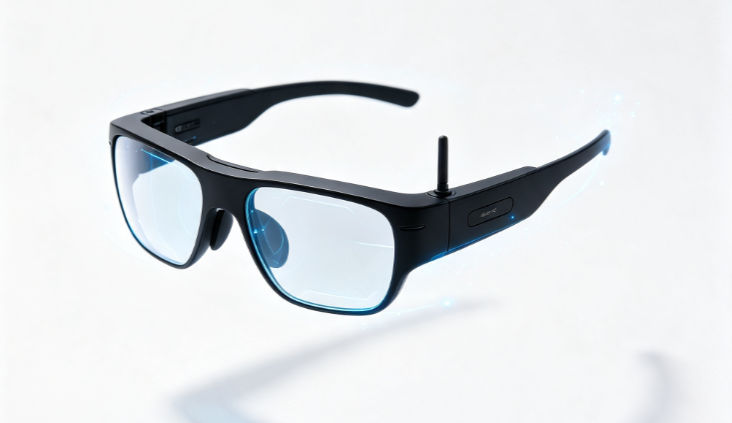
Driven by breakthroughs in on-device large language models and micro-optics manufacturing, AR glasses are rapidly evolving into more affordable, lightweight consumer products. Their design is also increasingly indistinguishable from conventional eyewear, achieving a far more practical form factor for everyday use.
According to the latest industry data from IDC and Counterpoint, global shipments of consumer AR glasses are surging at a compound annual growth rate (CAGR) of over 55%. Industry consensus holds that “AI is the soul of AR glasses, while advances in micro-display and waveguide technology are reshaping their architecture.”
Development Trends of Consumer AR Glasses in 2026
Trend 1: AI Empowerment — AR Glasses Transition to “Proactive Intelligence”
Previously, AR glasses were largely positioned as a “secondary extension screen” for smartphones, occupying a supplementary role in the market. The integration of large language models (LLMs) and multimodal AI has fundamentally redefined their value proposition. AR glasses are gradually emerging as personalized, desirable consumer tech products.
The Ray-Ban Meta smart glasses, developed jointly by Meta and EssilorLuxottica, have achieved remarkable global sales despite dispensing with a display screen and relying solely on an “AI + audio” configuration. In 2026, new-generation AR glasses from major brands including XREAL, Rokid, and TCL RayNeo will all come standard with a multimodal AI setup featuring cameras and lightweight on-device LLMs.
AI integration unifies voice, micro-gesture, and eye-tracking interactions into a cohesive system. Rather than waiting for explicit user commands, the glasses proactively interpret the scene in front of the wearer through the camera—automatically translating road signs, pulling up LinkedIn profiles when encountering strangers, or comparing product prices across platforms in real time—functioning as a first-person proactive intelligent assistant.
Trend 2: Display Technology Advancements
Display and optical modules have historically accounted for 40–50% of the total bill of materials for AR glasses, making high cost one of the primary barriers to mass consumer adoption.
1. Micro-LED: The Recognized Ultimate Micro-Display Solution
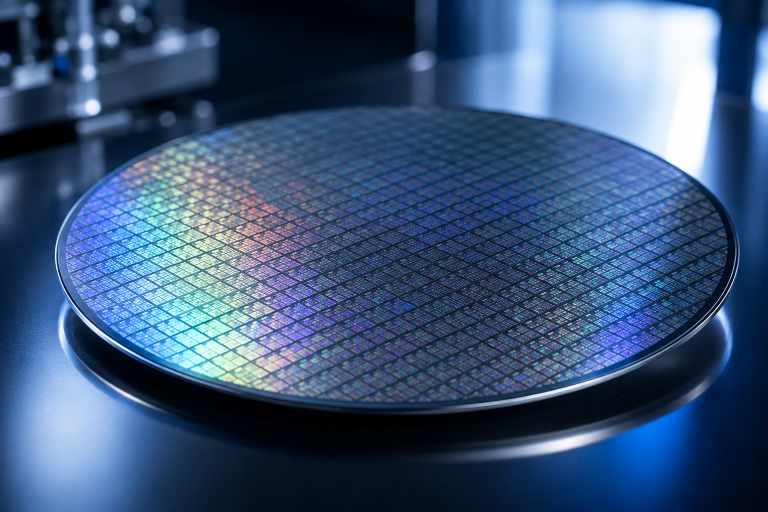
When worn outdoors under bright sunlight, AR glasses require peak display brightness in the hundreds of thousands of nits. Micro-LED technology offers a decisive advantage here: its inorganic light-emitting properties deliver a theoretical brightness exceeding 1,000,000 nits while consuming only 10% of the power of LCD panels, establishing it as the industry-recognized endgame for micro-displays.
Meta plans to launch true AR glasses featuring Micro-LED micro-displays by late 2027. To achieve this, Meta has partnered with South Korea’s Sapien Semiconductors to design Micro-LED driver backplanes manufactured by GlobalFoundries, and is collaborating with PlayNitride to scale up production of red Micro-LED chips.
Meanwhile, Samsung Display has announced its entry into the Micro-LED AR display market in 2027, supplying ultra-high-PPI single-panel full-color micro-display modules to the broader industry.
The current industry push centers on solving the “full-color” challenge. Leading manufacturers have already begun mass-producing single-panel full-color solutions using quantum dot (QD) color conversion technology, gradually replacing earlier monochrome (green-only) Micro-LED implementations.
2. Diffractive Waveguides: The Dominant Optical Platform
Waveguide technology enables lenses approaching the thickness of regular eyeglasses, making products lighter and more practical. It has become the standard configuration for consumer-grade AR devices.
An emerging technology pathway is Polarization Volume Grating (PVG). Leveraging the polarization selectivity of liquid crystal materials, PVG nearly doubles optical efficiency compared to traditional surface relief gratings (SRG) while significantly reducing nanoimprint manufacturing costs.
The industry has recently begun adopting silicon carbide (SiC) or high-refractive-index crystals as substrate materials, pushing refractive indices above 2.6. At equivalent lens thickness, this expands the field of view (FOV) from 30° to over 50° while eliminating the thermal discomfort caused by front-facing projectors, resulting in substantially improved wearability.
While Micro-LED represents the future, Meta’s adoption of high-brightness LCoS paired with silicon carbide waveguides in its Orion AR glasses project suggests that this mature technology will continue to benefit from further cost optimization.
Trend 3: Lowering the Barrier for All-Day Wear
For smart eyewear, every additional 10 grams of weight causes an exponential decline in wearing comfort. Consequently, minimizing weight to enable fatigue-free extended wear has become a key R&D priority for manufacturers.
Qualcomm’s Snapdragon AR1 platform reduces power consumption to the milliwatt range, enabling on-device lightweight voice and image AI processing without requiring active fan cooling.
Other manufacturers have adopted integrated titanium alloy frames and ultra-light polymer resin waveguide lenses. By 2026, mainstream consumer AR all-in-one devices will weigh between 40 and 60 grams, virtually indistinguishable in form from regular black-frame eyeglasses.
Battery life remains a limitation for 2–3 hours of continuous high-intensity use, but magnetic fast-charging via a portable smart glasses case already supports intermittent usage throughout an entire day.
Trend 4: Declining Costs Accelerate Consumer Adoption
For AR hardware to reach the mass market, seamless content interoperability with other platforms is essential.
Most AR manufacturers—including XREAL and TCL RayNeo—have opted for compatibility with the Android app ecosystem, using “spatial screen” technology to project mobile apps directly into three-dimensional space, steadily expanding content availability.
Google’s collaboration with Samsung and fashion brands like Gentle Monster and Warby Parker on display-equipped Android XR smart glasses, slated for a 2027 launch, is expected to catalyze market growth. Its core advantage lies in Gemini multimodal LLM integration—the glasses can pull up Google Maps for first-person turn-by-turn navigation, provide real-time translation of YouTube Live audio, and run native Android ecosystem applications.
According to supply chain analysts, Apple will begin mass production of its smart glasses, codenamed N50, in 2027. The first generation may adopt a “screenless” form factor (audio + AI + camera) that integrates with iPhone and Apple Watch, powered by Apple Intelligence with robust privacy protection and contextual understanding capabilities.
As manufacturers automate production lines, yield rates for core optical engine modules (such as OLEDoS and Micro-LED) and waveguide lenses have improved substantially. Industry analysts note: “In 2024, a decent pair of AR glasses typically cost 3,000–5,000 RMB. By 2026, as the supply chain matures, high-performance consumer AI-AR glasses in the 1,999–2,999 RMB price range will become the market mainstream.”
Trend 5: Expanding Application Scenarios
In 2026, AR glasses will transcend their role as purely entertainment devices and emerge as genuine productivity tools.
Key high-frequency use cases include real-time walking/cycling AR navigation for outdoor travel, simultaneous interpretation and teleprompter functionality during business meetings, and multi-virtual-screen monitorless computing in office environments.
Traditional eyewear giants such as EssilorLuxottica are also opening up their brand portfolios in 2027. Meta, for instance, is partnering with Oakley on athlete-specific smart glasses optimized for real-time AR data overlay in skiing and cycling scenarios. Apple’s N50 glasses, meanwhile, are rumored to feature premium acetate construction with up to four frame styles (including classic Wellington and elegant thin-rectangular designs) in multiple color options.
AR glasses are also entering a phase of scaled repeat purchases in sectors such as industrial manufacturing, warehousing and logistics, and surgical medicine. Workers wearing AR glasses can connect with remote experts for first-person guided inspections, dramatically improving operational efficiency.
Summary
The technology roadmap for the AR glasses industry in 2026 is remarkably clear: in the near term, the industry will focus on cost reduction and AI integration with LCoS/Micro-OLED plus waveguide configurations, while the long-term trajectory points toward single-panel full-color Micro-LED paired with high-refractive-index silicon carbide waveguides.
References
[2] Counterpoint Research, via PR Newswire. “RayNeo Leads Global AR Smart Glasses Shipments in Q1 2026.” PR Newswire, July 6, 2026.
[3] EE Times Asia. “Ray-Ban Meta Fuel 110% Smart Glasses Market Growth in 1H 2025.” EE Times Asia, August 19, 2025.
[4] DIGITIMES. “Sapien breaks into Meta’s AR supply chain, challenging China’s grip on smart glasses components.” DIGITIMES, December 17, 2025.
[5] TrendForce. “Plessey and Meta Unveil Groundbreaking Red Micro LED Display for AR Glasses, Featuring Up to 6 Million Nits.” TrendForce, January 16, 2025.
[6] Qualcomm Technologies, Inc. “Qualcomm Launches Its Next Generation XR and AR Platforms, Enabling Immersive Experiences and Slimmer Devices.” Qualcomm News Release, September 28, 2023.
[7] Samsung Global Newsroom. “Introducing Galaxy XR: Opening New Worlds.” Samsung Newsroom, October 21, 2025.
[8] MacRumors. “Apple Smart Glasses: Everything We Know About Apple’s Answer to Meta Ray-Bans.” MacRumors Guide, June 3, 2026.
[9] Gizchina. “Apple’s Upcoming AI Smart Glasses: Design and Hardware Details Revealed.” Gizchina, April 13, 2026.
[10] IDC. “XR Market Expands 44.4% in 2025 as Smart Glasses Take Center Stage.” IDC, March 25, 2026.
About the Author
Leo Harrison has over a decade of experience in the East Asian display supply chain and display semiconductor industry, specializing in smart hardware architecture and display technology evaluation.
Review Team
Review Team:
Special technical review and engineering validation provided by the Pengsheng Technology R&D Division.